5S for GCC Workspace and Digital Hygiene
September 17, 2026
Like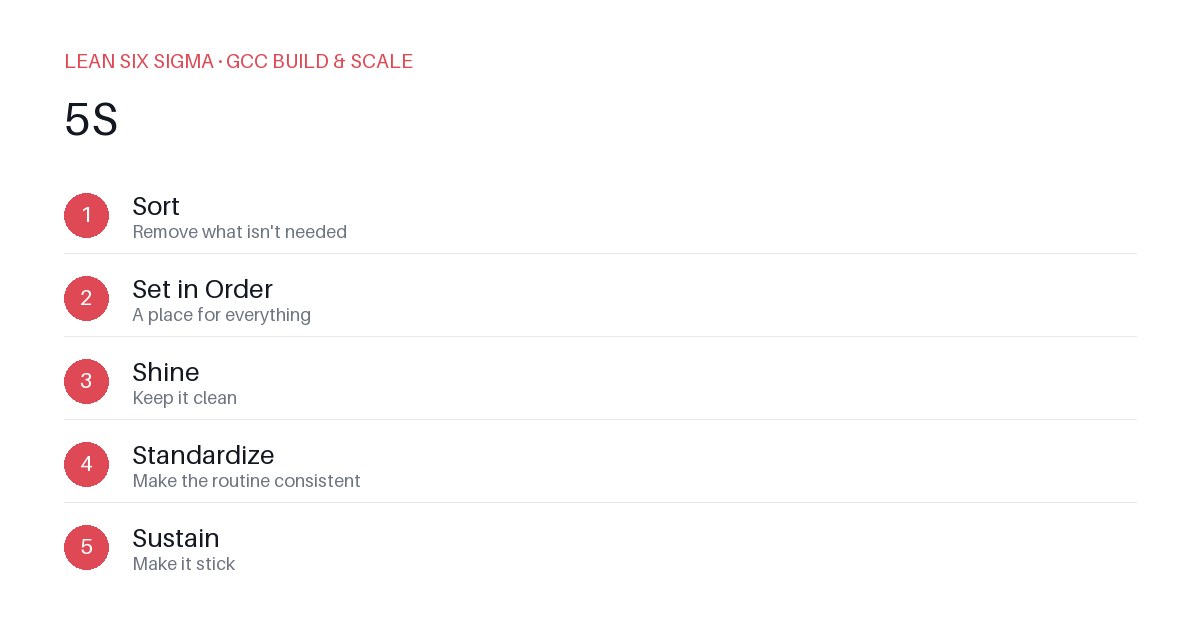
Downloadable templates
Apply 5S methodology to your GCC workspace and digital tools to reduce clutter, eliminate waste, and boost team productivity.
Why 5S in Your GCC
Global Capability Centers thrive on clarity and efficiency. 5S, a Japanese lean methodology, provides a structured approach to organizing both physical and digital workspaces. By implementing 5S, you can reduce search time, minimize errors, and create an environment where focus is on value-added activities.
Sort: Eliminate the Unnecessary
Start by reviewing every item in your workspace—both physical and digital. Ask: "Does this directly support our current projects?" If not, remove it. For physical spaces, this means clearing old documents, unused hardware, and expired materials. For digital tools, archive outdated files, close unused tabs, and delete redundant folders. This step alone can free up significant mental and physical space.
Set in Order: Organize for Easy Access
Once you've sorted, assign a designated place for each remaining item. Use labels, color coding, and consistent naming conventions to make locating tools and documents intuitive. In a GCC, this could mean organizing shared drives by project phase, setting up standardized templates, and ensuring all team members know where to find critical resources. Consistency is key—everyone should follow the same organizational rules.
Shine: Maintain Cleanliness
Cleanliness extends beyond aesthetics. A tidy workspace reduces distractions and promotes a professional environment. Schedule regular cleaning routines for both physical and digital spaces. Encourage team members to keep their desks and digital folders organized daily. In digital hygiene, this includes clearing temporary files, updating software, and backing up important data. A clean workspace signals respect for the work being done.
Standardize: Create Consistent Processes
Develop clear procedures for maintaining 5S practices. This might involve creating checklists for workspace audits, establishing guidelines for file naming, and training new team members on organizational standards. Standardization ensures that everyone follows the same processes, reducing variability and errors. In a GCC, this could mean implementing a weekly review of shared drives or setting up automated alerts for outdated documents.
Sustain: Make It a Habit
The final step is sustaining 5S practices over time. Regular audits, feedback loops, and recognition of teams that maintain high standards help reinforce the importance of organization. Incorporate 5S into your GCC's continuous improvement culture. Celebrate small wins, such as a project completed with zero wasted time due to disorganization. Make it a habit, not a one-time initiative.
Concrete Steps to Implement 5S
- Audit Your Workspace: Conduct a full review of physical and digital tools. Identify what can be removed.
- Assign Places: Create a clear system for organizing remaining items. Use labels and consistent naming conventions.
- Clean Regularly: Schedule daily or weekly cleaning routines for both physical and digital spaces.
- Standardize Processes: Develop checklists and guidelines for maintaining organization. Train all team members.
- Sustain the Culture: Incorporate 5S into continuous improvement efforts. Recognize and reward teams that maintain high standards.
By applying 5S, your GCC can operate more efficiently, reduce waste, and create an environment where teams can focus on delivering value. Start small, measure the impact, and scale the practice across your organization.
Comments
Be the first to comment on this post.
Sign in to leave a comment.