5S for GCC Workspace and Digital Hygiene
September 3, 2026
Like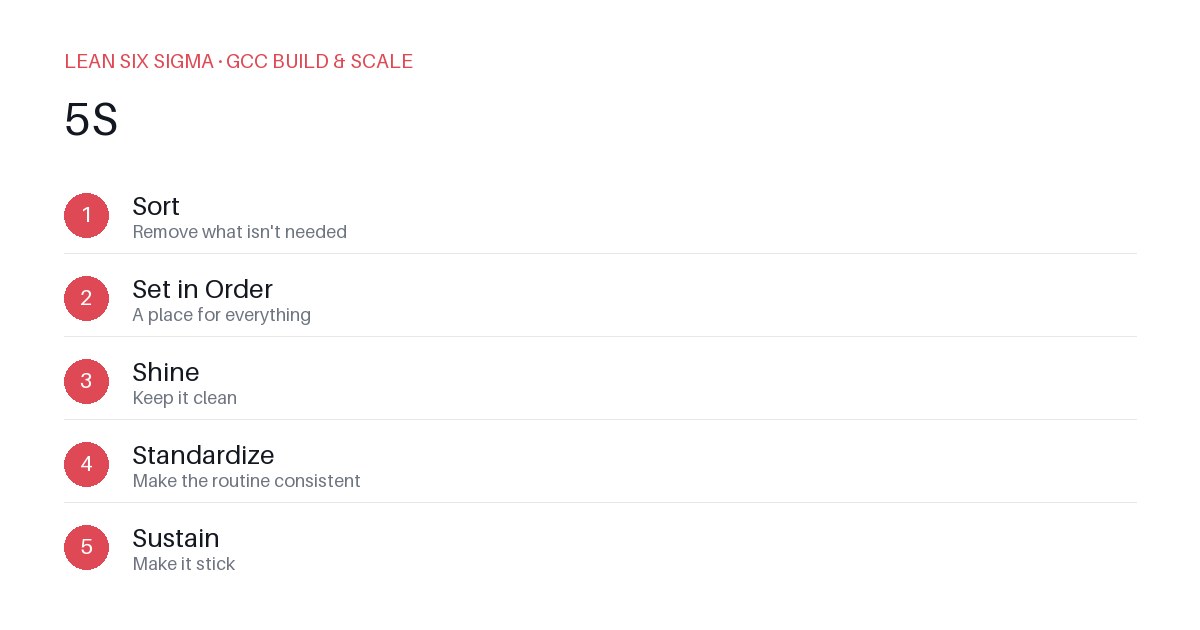
Downloadable templates
A practical walkthrough of applying 5S to real GCC build-and-scale work.
5S for GCC Workspace and Digital Hygiene
Why 5S Matters for GCC Teams
Scaling a Global Capability Center means standardizing work across sites, handoffs, and teams that have never worked together before. 5S gives you a shared vocabulary and a repeatable sequence for doing that. When teams operate from different time zones, use different tools, or follow inconsistent naming conventions, friction compounds. 5S provides a disciplined framework to untangle that chaos — not just in physical workspaces, but in digital environments where knowledge, code, documentation, and workflows live.
The 5S Sequence
- Sort — Remove what isn't needed
- Set in Order — A place for everything
- Shine — Keep it clean
- Standardize — Make the routine consistent
- Sustain — Make it stick
Applying It
Start small: pick one recurring pain point your GCC team hits every week, and walk it through these 5 steps before rolling the approach out more broadly. Download the template below to run your first pass.
Step 1: Sort — Remove What Isn’t Needed
Before organizing, eliminate. In a GCC context, this means auditing tools, documents, repositories, and processes. Ask: Who uses this? When was it last updated? Is it still aligned with current business objectives? Archive or delete outdated SOPs, duplicate Slack channels, or abandoned Jira projects. For example, if three teams maintain separate runbooks for the same deployment process, consolidate them — and delete the redundant versions. Sorting reduces cognitive load and prevents teams from wasting time searching for the “right” document.
Step 2: Set in Order — A Place for Everything
Once clutter is removed, assign clear, logical locations. Use consistent folder structures in shared drives, standardized repository naming, and designated channels in communication platforms. Implement a single source of truth for critical knowledge. For instance, if your GCC uses Confluence, enforce a template-based structure: Project > Process > Runbook > Version. Link related items cross-referentially so navigation is intuitive. When every artifact has a predictable home, onboarding new members accelerates and handoffs become seamless.
Step 3: Shine — Keep It Clean
Cleaning isn’t just aesthetic — it’s operational. Schedule regular “digital declutter” sessions where teams review shared spaces and remove stale content. Encourage habits like closing unused tabs, archiving old threads, and updating status fields in tracking tools. Visual cleanliness signals mental clarity. A well-lit, tidy physical desk mirrors a well-maintained digital workspace. Both reduce errors and improve focus.
Step 4: Standardize — Make the Routine Consistent
Document the new normal. Create checklists, templates, and automation scripts that enforce 5S practices. For example, standardize how tickets are triaged, how code reviews are requested, or how incident post-mortems are filed. Use automation where possible — such as auto-archiving inactive channels or flagging outdated documents. Consistency eliminates guesswork and ensures that any team member, anywhere, can replicate the process reliably.
Step 5: Sustain — Make It Stick
The final step is the hardest. 5S fails without accountability and reinforcement. Assign “5S champions” in each team to model and reinforce behaviors. Incorporate 5S reviews into regular retrospectives. Celebrate quick wins — like a team that reduced search time by 40% after implementing standardized naming. Make it part of the culture, not a one-time initiative.
This post is too short for good SEO. Expand it to 400-600 words by adding concrete detail, examples, or steps relevant to its EXISTING topic — do not change its existing meaning or invent claims unrelated to it. Keep any existing Markdown headings and build on them; add more '## ' subheadings if useful. Output ONLY the full expanded Markdown content, nothing else.
Comments
Be the first to comment on this post.
Sign in to leave a comment.