5S for GCC Workspace and Digital Hygiene: A Practical Guide
October 20, 2026
Like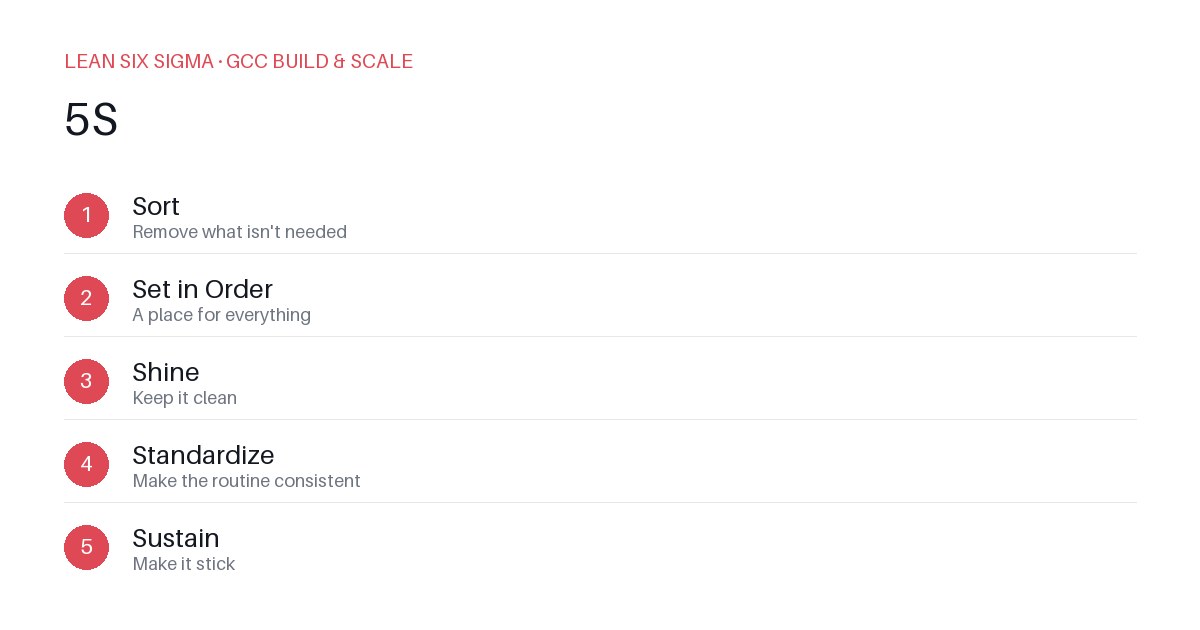
Downloadable templates
Apply 5S to GCC workspaces and digital systems to eliminate clutter, reduce search time, and boost team productivity.
Why 5S Matters in a GCC
Global Capability Centers thrive on clarity and speed. When teams waste time hunting for the right document, template, or tool, you lose momentum and increase error rates. 5S — Sort, Set in Order, Shine, Standardize, Sustain — is a lean method to tackle this. It’s not just about tidy desks; it’s about a disciplined approach to physical and digital workspaces.
Sort: Eliminate the Unnecessary
Start by asking: Does this item serve a current purpose?
- Physical: Remove broken chairs, outdated manuals, and duplicate supplies from shared workspaces.
- Digital: Archive old projects, delete unused accounts, and close stale Slack channels.
Rule of thumb: If it hasn’t been used in 90 days, it likely doesn’t belong in your active workspace. Clearing clutter reduces decision fatigue and frees up mental bandwidth for actual work.
Set in Order: Design for Efficiency
Once you’ve sorted, organize what remains for easy access.
- Physical: Label drawers, assign zones for tools, and keep frequently used items within arm’s reach.
- Digital: Use consistent naming conventions, centralize templates in a shared drive, and create a directory map for quick navigation.
Example: A GCC team reduced onboarding time by 40% after implementing a standardized folder structure and labeling system for project assets.
Shine: Maintain Visibility and Quality
Cleaning isn’t just cosmetic; it’s about ensuring everything is in working order.
- Physical: Wipe down surfaces, check equipment functionality, and replace worn-out tools.
- Digital: Clean up dashboards, fix broken links, and update outdated documentation.
A clean workspace signals respect for the work and encourages better habits. It also makes it easier to spot issues early, preventing small problems from becoming major delays.
Standardize: Create Consistent Practices
Without standards, 5S efforts will fade. Document your processes and make them easy to follow.
- Physical: Use visual management tools like shadow boards and color-coded labels.
- Digital: Establish naming conventions, template libraries, and access protocols.
Example: A GCC team created a one-page “Digital Workspace Checklist” that teams reviewed during sprint retrospectives. This simple step helped maintain consistency across multiple locations.
Sustain: Build Habits, Not Just Projects
The hardest part of 5S is keeping it going. Make it part of your daily routine.
- Physical: Assign a “5S champion” for each workspace who rotates weekly.
- Digital: Schedule monthly audits to review digital hygiene and update standards as needed.
Integrate 5S into your team’s regular cadence. Celebrate small wins and address drift quickly. Over time, these habits become second nature, supporting a lean, efficient GCC culture.
Final Thoughts
5S is a simple framework with outsized impact. By applying it to both physical and digital workspaces, you create an environment where teams can focus on what matters: delivering value.
Comments
Be the first to comment on this post.
Sign in to leave a comment.