5S for GCC: Digital Hygiene & Clear Workspaces
October 2, 2026
Like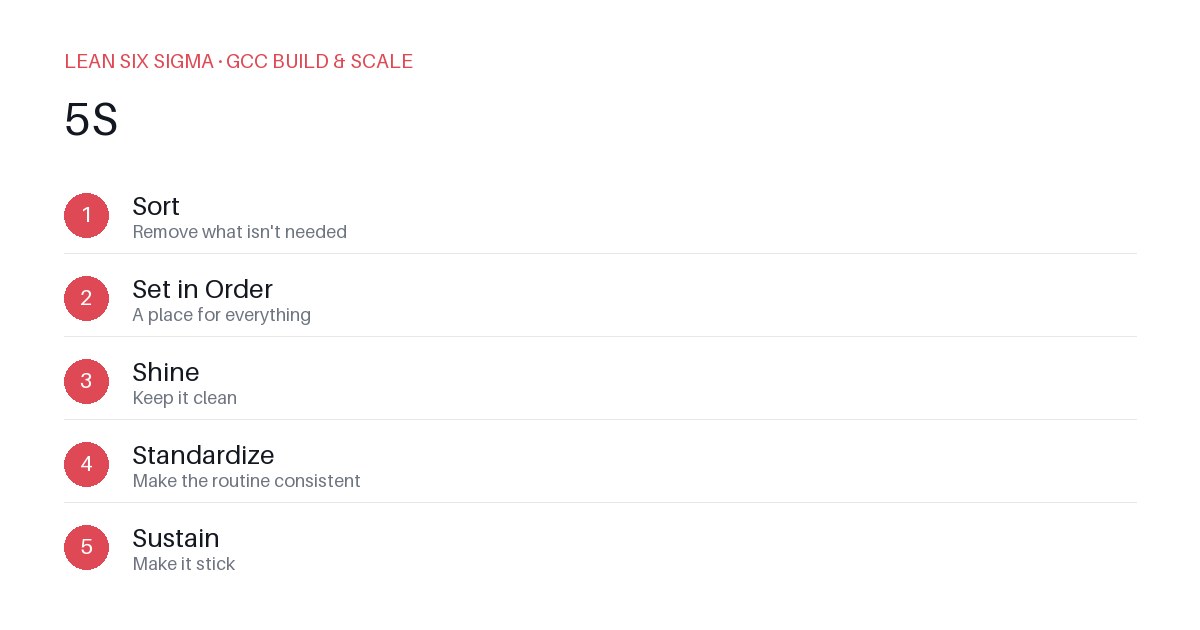
Downloadable templates
Apply 5S to your GCC workspace and digital tools to eliminate clutter, reduce search time, and keep teams focused on value.
Why 5S in a GCC Matters
Global Capability Centers thrive on efficiency. But clutter—physical or digital—creates friction. 5S (Sort, Set in Order, Shine, Standardize, Sustain) is a Lean Six Sigma tool that cuts waste and improves flow. When applied to workspace and digital hygiene, it directly impacts delivery speed and team morale.
Sort: Eliminate What Doesn't Serve You
Start by asking: "Do we need this?" Apply this to both physical and digital assets.
- Physical: Remove broken chairs, unused monitors, and outdated posters. If a tool hasn't been used in 30 days, archive or discard it.
- Digital: Delete duplicate files, close unused Slack channels, and revoke access to deprecated tools. A clean inbox and desktop reduce cognitive load.
Example: A GCC team in Bangalore eliminated 40% of redundant Jira projects by consolidating them into a single board, cutting weekly status meeting time by two hours.
Set in Order: Design for Intuitive Access
Once clutter is gone, arrange what remains for maximum efficiency.
- Physical: Assign fixed locations for laptops, chargers, and reference materials. Use labels and clear zones so anyone can find tools without asking.
- Digital: Standardize folder structures, naming conventions, and dashboard layouts. Use bookmarks, templates, and automated workflows to reduce repetitive tasks.
Scenario: A GCC in Mumbai implemented a shared drive structure with color-coded folders by project phase. New hires onboarded 30% faster because they could locate documentation without guidance.
Shine: Maintain Visibility and Readiness
Cleanliness isn't just aesthetic—it's operational. Shine ensures that tools and spaces are ready for use.
- Physical: Wipe down desks, organize cables, and inspect equipment weekly. A tidy workspace signals professionalism and reduces distractions.
- Digital: Run regular audits of shared drives, clean up outdated dashboards, and verify that links and permissions are current. A cluttered digital environment breeds errors and delays.
Real case: A GCC in São Paulo reduced support tickets by 25% after implementing a monthly "digital shine" ritual where teams reviewed and archived inactive resources.
Standardize: Make It Repeatable
Consistency is the backbone of 5S. Without standards, clutter returns.
- Physical: Define clear protocols for where items belong and how to return them. Use visual management like floor tape or labels to guide behavior.
- Digital: Create SOPs for file naming, project setup, and tool usage. Automate where possible to enforce standards without manual oversight.
Example: A GCC in Hyderabad standardized their Confluence wiki with template pages and required fields, reducing onboarding time and ensuring new hires had consistent access to knowledge.
Sustain: Build Habits, Not Just Processes
The hardest part of 5S is keeping it alive. Embed it into daily routines.
- Physical: Assign a "5S captain" per week to check workspaces and address issues. Celebrate teams that maintain high standards.
- Digital: Schedule quarterly audits of shared drives and tool usage. Use dashboards to track hygiene metrics and hold teams accountable.
Key insight: A GCC in Singapore tied 5S compliance to performance reviews, resulting in a 40% reduction in tool-related delays over six months.
Final Take
5S isn't about perfection—it's about progress. Start small, focus on high-impact areas, and make hygiene a habit. Clear workspaces and digital tools lead to faster decisions, fewer errors, and happier teams. Apply 5S today, and watch your GCC's efficiency climb.
Comments
Be the first to comment on this post.
Sign in to leave a comment.