Control Plans for GCC Process Stability
October 4, 2026
Like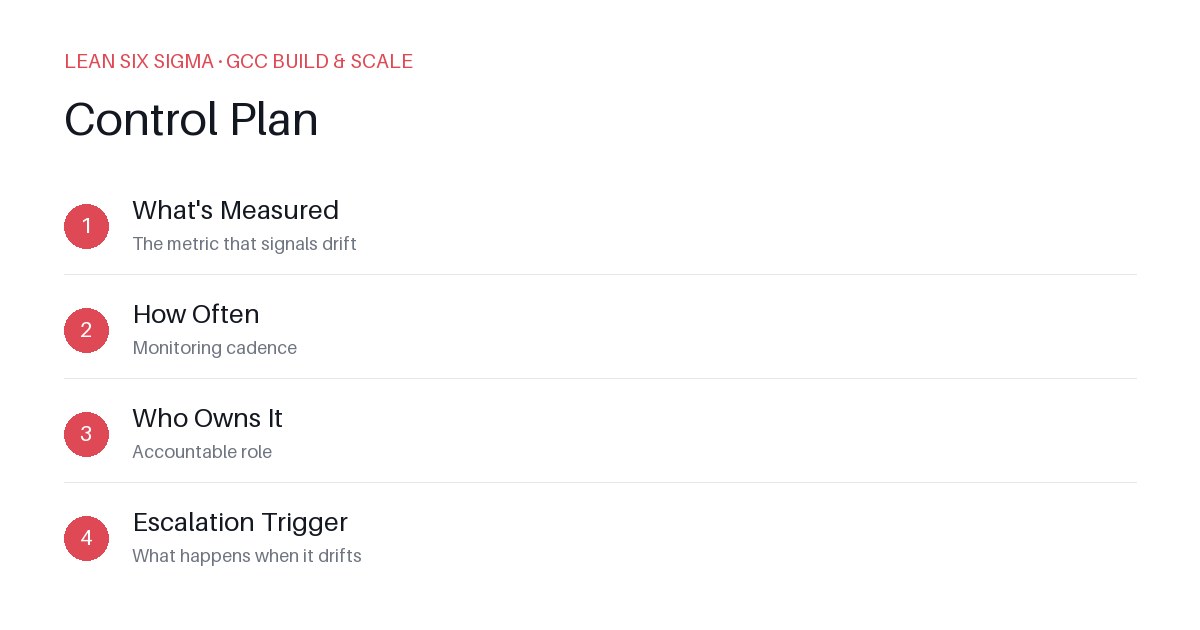
Downloadable templates
A practical framework for building control plans that stabilize GCC processes and reduce variation.
Why Control Plans Matter in GCCs
A Global Capability Center (GCC) is only as reliable as its most inconsistent process. Without control plans, you’re guessing where defects come from and reacting instead of preventing them. A control plan is a living document that locks in the right methods, parameters, and checks for each critical step.
Build a Control Plan That Actually Works
Start with the right foundation. A control plan should include:
- Process steps and responsible roles
- Critical quality characteristics (CQCs)
- Measurement methods and tools
- Control limits and acceptance criteria
- Response actions for out-of-control signals
Define Critical Quality Characteristics
Not every process element deserves equal attention. Identify the CQCs that directly impact service quality or compliance. Use a risk-based approach:
- Map each step to potential failure modes
- Rate impact on customer outcomes
- Prioritize based on frequency and severity
Set Measurement Standards
Inconsistent measurement destroys process stability. Standardize how you track each CQC:
- Specify the tool and calibration requirements
- Define the sample size and frequency
- Assign trained operators to each measurement
Establish Control Limits
Use historical data or pilot runs to set realistic control limits. Avoid overly tight limits that trigger false alarms or too loose limits that miss real issues. Consider:
- Statistical control charts for continuous processes
- Binomial charts for defect counts
- Time-based limits for cycle times
Define Response Actions
When a signal goes out of control, you need a clear playbook. Include:
- Immediate containment steps
- Root cause investigation triggers
- Escalation paths to GCC leadership
- Feedback loops to update the control plan
Review and Update Regularly
Control plans aren’t set-and-forget documents. Schedule quarterly reviews to:
- Analyze control chart trends
- Update limits based on new data
- Retrain operators as processes evolve
- Archive obsolete versions for audit trails
Common Pitfalls to Avoid
- Overcomplicating the control plan with unnecessary detail
- Skipping measurement standardization
- Ignoring operator feedback on usability
- Failing to link control plans to daily huddles
Final Thoughts
A well-built control plan turns process knowledge into repeatable results. Start small, focus on your most critical processes, and iterate based on real data. Stability comes from discipline, not perfection.
Comments
Be the first to comment on this post.
Sign in to leave a comment.