Cutting GCC Onboarding Delays with DMAIC: A Practical Guide
September 21, 2026
Like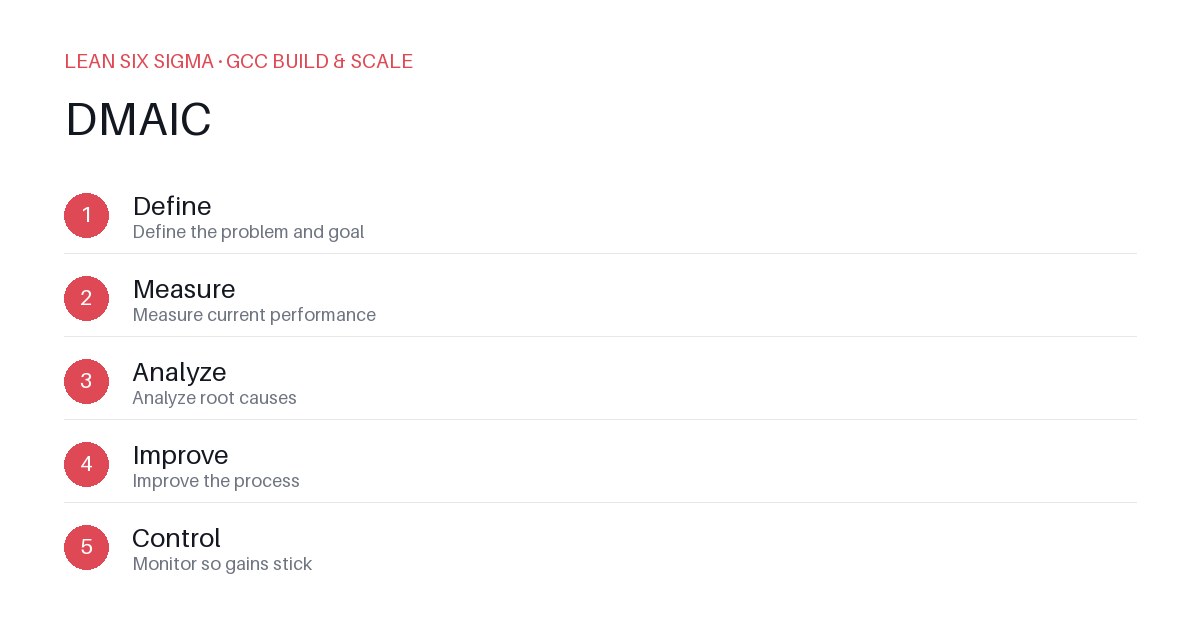
Downloadable templates
Use DMAIC to identify and eliminate bottlenecks in your Global Capability Center onboarding process for faster time-to-productivity.
Defining the Problem
Onboarding delays in a Global Capability Center (GCC) can stall project delivery. For example, a new team member might take three weeks to become fully productive instead of the target two weeks. This gap impacts delivery timelines and increases costs. Use the Define phase to clarify the scope. Identify specific pain points like delayed access provisioning, unclear role expectations, or insufficient training resources. Quantify the problem with metrics: average onboarding time, time-to-first-task, and employee satisfaction scores. This sets a clear baseline for improvement.
Measuring Current Performance
Collect data to understand the current state. Track each step in the onboarding process, from hiring to full productivity. Use tools like time-tracking software or project management platforms to capture cycle times. Interview stakeholders, including new hires, managers, and HR, to gather qualitative insights. Look for patterns. Are delays concentrated in specific regions or departments? Map the value stream to identify non-value-added activities, such as redundant approvals or manual data entry. This data-driven approach reveals where to focus your efforts.
Analyzing Root Causes
Use techniques like the 5 Whys or fishbone diagrams to dig into the root causes of delays. Common issues might include:
- Access Provisioning: IT delays due to complex system integrations.
- Training Gaps: Inadequate or outdated training materials.
- Role Ambiguity: Unclear expectations leading to hesitation.
- Bottlenecks: Overloaded HR or IT teams.
Prioritize the most impactful causes. For instance, if 60% of delays stem from access provisioning, tackle that first. Understanding the "why" behind each delay is critical for designing effective solutions.
Implementing Solutions
Address the identified root causes with targeted actions. Examples include:
- Streamline Access Provisioning: Automate system access using scripts or integrate HRIS with IT tools to reduce manual steps.
- Enhance Training: Create modular, role-specific training modules accessible online. Assign mentors for hands-on support.
- Clarify Roles: Develop detailed onboarding checklists with clear milestones and responsibilities.
- Distribute Workload: Cross-train staff to handle peak onboarding periods.
Pilot these changes with a small group. Monitor progress closely and adjust as needed. Ensure all stakeholders understand their roles in the new process.
Controlling and Sustaining Improvements
Monitor the new onboarding process to ensure it meets targets. Track key metrics regularly: time-to-productivity, error rates, and feedback scores. Use dashboards to visualize progress and alert teams to deviations. Conduct periodic reviews to identify emerging issues. Celebrate wins to reinforce positive behaviors. Document the improved process in your knowledge base for future reference. Continuous monitoring prevents regression and ensures long-term efficiency. By embedding these controls, you maintain momentum and keep onboarding delays in check.
Comments
Be the first to comment on this post.
Sign in to leave a comment.