Kaizen Habits for Distributed GCC Teams
September 14, 2026
Like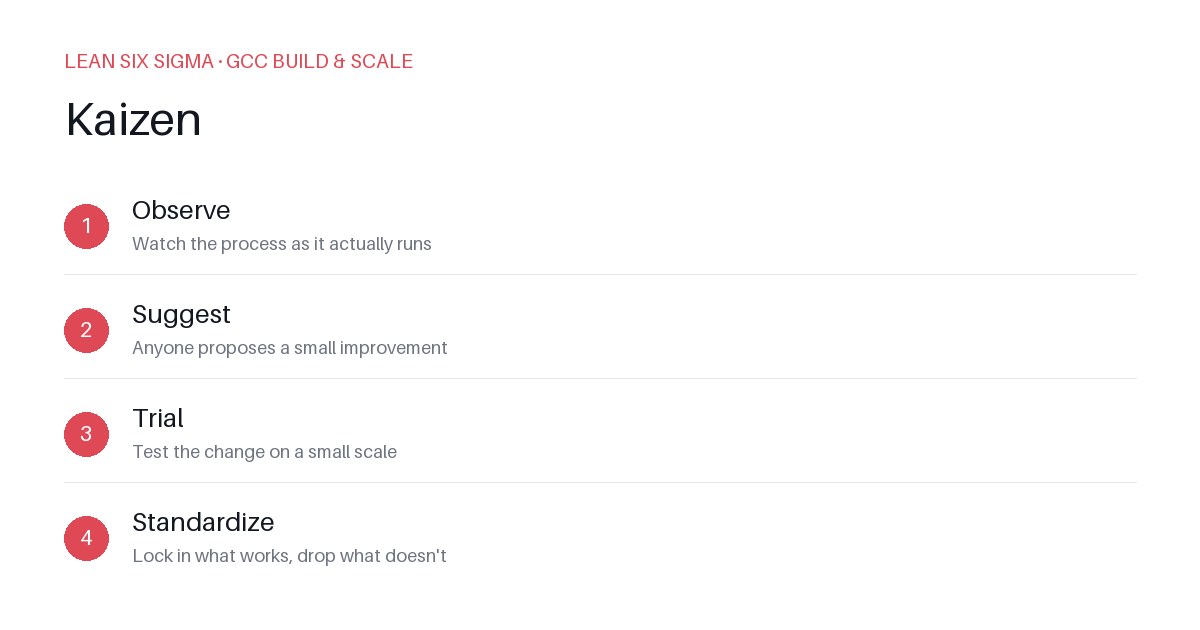
Downloadable templates
Practical daily and weekly habits to drive continuous improvement across distributed Global Capability Centers using Lean Six Sigma.
Start with a Daily Stand-up That Actually Matters
Forget the generic "what did you do yesterday?" ritual. Distributed GCC teams need a focused 15-minute daily stand-up that targets one specific process or workflow. Use a shared digital whiteboard to track one metric, such as defect escape rate or cycle time. Each team member shares one action taken to improve that metric. This keeps the focus on improvement rather than status updates.
Implement a Weekly Kaizen Event
Schedule a recurring weekly session dedicated to identifying and solving small, immediate problems. This isn't a formal project; it's a rapid response to friction points. Use the A3 problem-solving method to structure these sessions. Start by defining the problem clearly, then gather data, analyze root causes, and implement a countermeasure. Keep it to one hour per week to maintain momentum without overwhelming the team.
Standardize Work to Enable Variation Analysis
Create and document standard work for repeatable tasks within the GCC. This isn't about rigidity; it's about establishing a baseline to measure improvement. When standard work is clear, any deviation becomes visible. Use this visibility to identify where processes are breaking down or where opportunities for improvement exist. Regularly review and update these standards as teams learn and improve.
Encourage Daily Problem-Solving
Empower team members to identify and solve problems on the spot. Provide tools like the 5 Whys and Fishbone diagrams to help them analyze issues effectively. Encourage a culture where pointing out problems is seen as a contribution, not a complaint. This shifts the focus from blame to solution-oriented thinking.
Track and Visualize Improvement
Use a simple dashboard to track key metrics related to your Kaizen efforts. Visualize the impact of changes to reinforce positive behavior. Celebrate small wins publicly to motivate the team. This keeps the focus on continuous improvement and ensures that progress is visible and valued.
Foster a Culture of Respect and Engagement
Kaizen is not just about processes; it's about people. Encourage open communication and respect among team members. Ensure that everyone feels comfortable sharing ideas and concerns. This builds trust and creates an environment where continuous improvement can thrive. Remember, the best improvements come from those closest to the work.
Comments
Be the first to comment on this post.
Sign in to leave a comment.