Kaizen Habits for Distributed GCC Teams
September 22, 2026
Like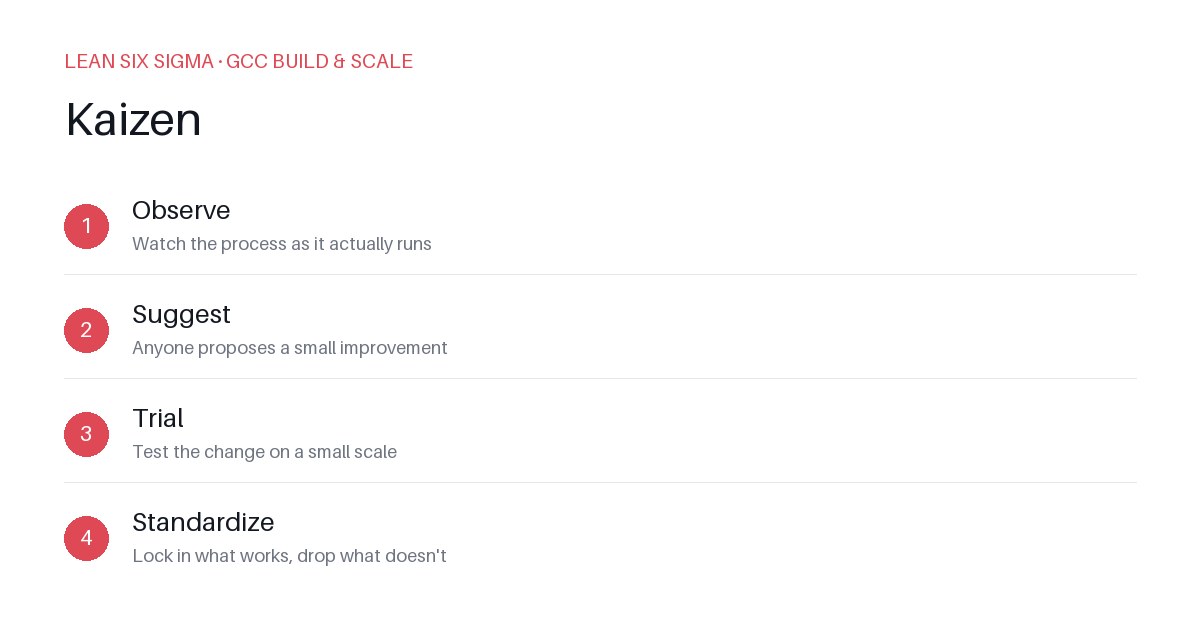
Downloadable templates
Small, daily improvements keep distributed GCC teams aligned and productive without heavy governance overhead.
Start with a Shared Definition of Done
Distributed teams often drift because “done” means different things in each location. Pick one metric that matters most for your GCC — cycle time, defect escape rate, or deployment frequency — and publish it. Everyone uses the same number. Track it weekly in a shared dashboard. If one site is lagging, you see it immediately. No meetings required.
Run Daily 15-Minute Focus Sessions
Skip the status update. Instead, each team runs a tight 15-minute session every morning. The format is fixed: one win, one blocker, one action. The blocker gets assigned to a person with a deadline. This creates accountability without adding management layers. In a GCC with teams across three time zones, rotate the session time so each region owns one day per week. Everyone stays engaged.
Use Visual Management Boards
Replace long emails with a simple Kanban board visible to all sites. Columns: Ready, In Progress, Review, Done. Each card has a clear owner and due date. When a card stays in “In Progress” for more than two days, it triggers a review. This makes bottlenecks obvious. Teams can spot where work piles up without waiting for a report.
Hold Weekly Kaizen Huddles
Every Friday, gather a small group of representatives from each location. Spend 30 minutes discussing one process pain point. The goal is not to solve everything — just to identify one small change to test next week. Document the change in a shared log. After two weeks, measure the impact. If it helps, keep it. If not, drop it. This builds a culture of experimentation.
Rotate Process Owners
Assign a different team member each month to own a specific process — for example, code review turnaround or test automation coverage. The owner is responsible for tracking performance and suggesting improvements. Rotation prevents burnout and spreads knowledge. It also surfaces hidden expertise. Someone who quietly improves their area might become a natural leader.
Measure and Celebrate Small Wins
Track improvements in a visible way. When a team reduces defect rates by 10% in a month, acknowledge it publicly. Share the method used so others can replicate it. Recognition reinforces the right behaviors. In a distributed GCC, visibility is key — people need to see that small efforts matter.
Build Feedback Loops into Workflows
Every task should have a feedback step. After deployment, collect metrics. After a review, note time spent. After a test run, record failure rates. Use this data to adjust processes. Make feedback part of the routine, not an afterthought. This keeps teams aligned with real outcomes.
Avoid Common Pitfalls
Don’t force Kaizen where it doesn’t fit. If a process is stable, leave it alone. Focus on areas with clear pain points. Don’t overcomplicate tools — simplicity wins. Avoid adding meetings without a clear purpose. If a session doesn’t produce an action, cancel it. Protect team time. Remember, Kaizen is about progress, not perfection.
Next Steps
Pick one habit from this list and implement it in your GCC next week. Track the result. Share what worked. Build from there. Small changes compound over time. Your distributed team will thank you for the clarity and focus.
Comments
Be the first to comment on this post.
Sign in to leave a comment.