Kaizen Habits for Distributed GCC Teams
August 19, 2026
Like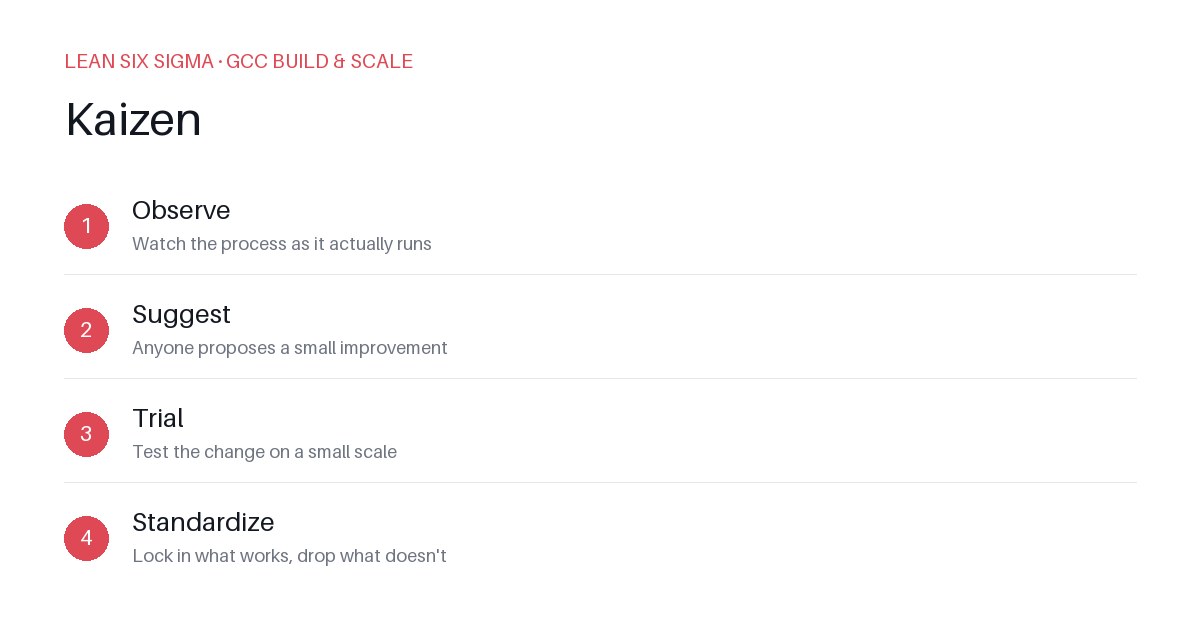
Downloadable templates
Small, continuous improvements drive GCC efficiency without heavy restructuring.
Kaizen Habits for Distributed GCC Teams
Start with a 5-Minute Daily Huddle
Distributed GCC teams often suffer from misalignment. A 5-minute daily standup forces clarity. Each member shares one win, one blocker, and one focus for the day. No deep dives. Just enough to keep momentum. To make this effective, schedule it at the same time every day across time zones, using a rotating host to keep engagement high. Encourage participants to use a shared template in your chat tool so everyone contributes equally. This ritual builds psychological safety and ensures that critical path items are surfaced before they become crises.
Track Cycle Time, Not Hours
Hours logged don’t equal value delivered. Measure cycle time from task assignment to completion. This reveals bottlenecks instantly. Use simple tools like Trello or Jira to log start and end timestamps. When you track cycle time, you can identify where work stalls—whether it’s waiting for QA, pending legal review, or blocked by unclear requirements. Set a target cycle time for each type of ticket and review it weekly. This metric shifts the team’s mindset from “how many hours did I work?” to “how fast can we deliver value?” It also helps managers allocate resources more intelligently, prioritizing tasks that impact the overall flow.
Run Weekly Kaizen Events
Every Friday, dedicate 30 minutes to one process improvement. Pick a recurring pain point: slow approvals, redundant documentation, unclear handoffs. Brainstorm fixes. Assign owners. Implement next week. To maximize impact, rotate who leads the session and encourage cross-functional participation. Document the proposed change in a shared wiki with clear success criteria. For example, if approval delays are a problem, you might pilot a “two-day SLA” for non-critical reviews and measure whether cycle time improves. Celebrate small wins publicly to reinforce a culture of continuous improvement. Remember, Kaizen isn’t about overhauling systems—it’s about incremental, sustainable change.
Visualize Work Flow
Hidden work kills productivity. Map your GCC’s current workflow on a whiteboard or digital board. Highlight handoffs, delays, and rework loops. Make the invisible visible. Use a Kanban-style board with columns like “Backlog,” “In Progress,” “In Review,” “Blocked,” and “Done.” Color-code items by type or priority to spot patterns. When you can see where tickets pile up, you can investigate root causes rather than symptoms. Involve the whole team in creating the map—it builds shared understanding and surfaces tacit knowledge. Revisit the visualization monthly to track progress and adjust as your processes evolve.
Empower Frontline Fixes
GCC analysts and engineers see problems first. Create a simple channel (Slack, Teams) for quick suggestions. Reward small wins publicly. No bureaucracy. Just action. To keep this channel active, designate a “Kaizen Champion” who follows up on suggestions within 48 hours. If a suggestion is viable, implement it within a week; if not, explain why. This transparency prevents frustration and builds trust. Share success stories in team meetings to show that feedback leads to real change. For instance, if someone suggests automating a manual data entry step, support them in building a simple script and measure the time saved. Empowering frontline staff turns passive observers into active problem-solvers.
Review Metrics Monthly
Track three numbers: defect rate, cycle time, and team satisfaction. Review them monthly. Adjust processes based on data, not opinion. Celebrate improvements, not perfection. Use a simple dashboard to display these metrics in real time. Pair quantitative data with qualitative feedback—run a short anonymous survey alongside metric reviews to capture the human side of performance. If cycle time improves but satisfaction drops, investigate whether the team is overworked. If defect rate rises, look for training gaps or unclear standards. Use these insights to refine your Kaizen events and daily huddles. Remember, metrics are tools for learning, not weapons for judgment.
Avoid Common Traps
Don’t overcomplicate. Start small. Don’t ignore cultural friction. Address it head-on. Don’t skip feedback loops. Close them quickly. Many teams fail at Kaizen because they try to change too much at once or ignore the human elements of change. Instead, focus on one process at a time and involve everyone in the solution. When resistance arises, listen actively and adjust. Close feedback loops by acknowledging suggestions, even if you can’t act on them immediately. This keeps the door open for future collaboration. Kaizen isn’t a program. It’s a habit. Build it daily.
Comments
Be the first to comment on this post.
Sign in to leave a comment.