Kaizen Habits for Distributed GCC Teams
November 4, 2026
Like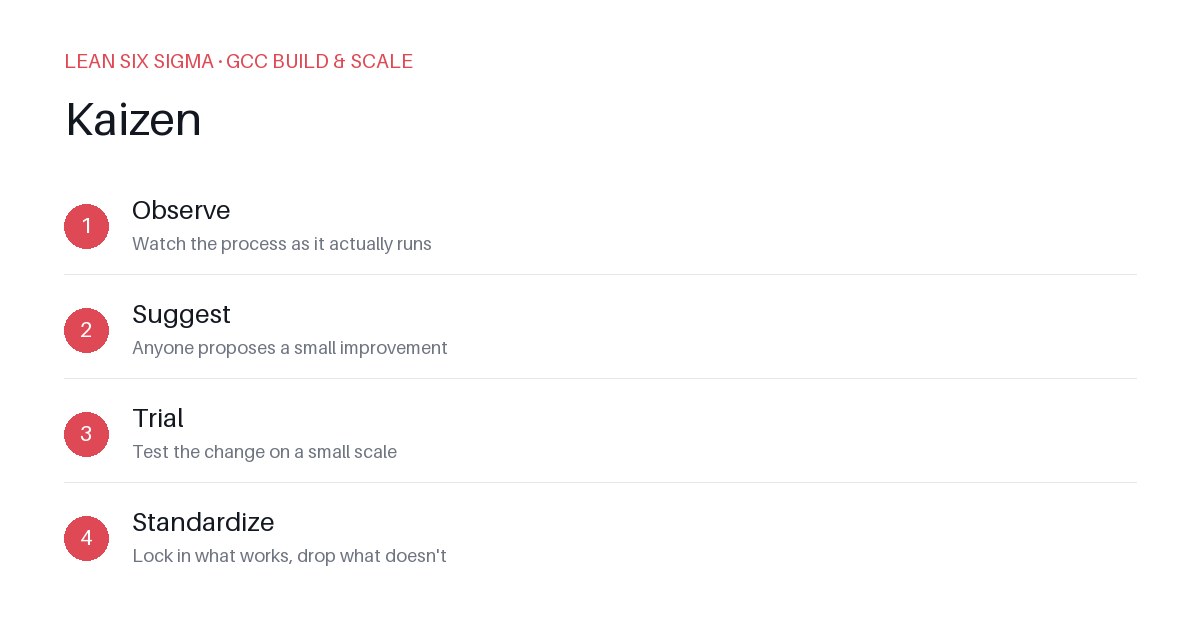
Downloadable templates
A practical walkthrough of applying Kaizen to real GCC build-and-scale work.
Kaizen Habits for Distributed GCC Teams
Why Kaizen Matters for GCC Teams
Scaling a Global Capability Center (GCC) means standardizing work across sites, handoffs, and teams that have never worked together before. In a distributed environment, time zones, cultural nuances, and tooling differences can create invisible friction that slows delivery and erodes morale. Kaizen gives you a shared vocabulary and a repeatable sequence for doing that work better — without requiring massive overhauls or top-down mandates.
When teams operate in silos, small inefficiencies compound. A delayed code review, a misaligned definition of “done,” or a redundant status update can cascade into missed deadlines. Kaizen provides a lightweight, iterative framework that empowers every team member — from junior developers to senior architects — to identify waste and propose improvements. It turns continuous improvement from a corporate initiative into a daily habit.
The Kaizen Sequence
- Observe — Watch the process as it actually runs. Don’t rely on assumptions or documented procedures; sit with the team, track handoffs, and note where delays, rework, or confusion occur. In a GCC context, this might mean shadowing a handoff between APAC and EMEA teams or mapping the flow of a ticket from intake to deployment.
- Suggest — Anyone proposes a small, actionable improvement. The key is “small.” Instead of overhauling the entire sprint planning process, suggest a 5-minute daily sync for cross-site teams or a standardized template for incident post-mortems. Encourage psychological safety so that no suggestion is dismissed outright.
- Trial — Test the change on a small scale. Run the suggestion as a time-boxed experiment. For example, if a team proposes a new code review checklist, pilot it for one sprint or one project. Measure outcomes: Did cycle time decrease? Were fewer defects caught late? Did team satisfaction improve?
- Standardize — Lock in what works, drop what doesn’t. Once a trial proves its value, formalize it into team rituals, documentation, or tooling. If it didn’t work, document why and iterate. Standardization ensures that gains are retained and become the new baseline for future improvements.
Applying It
Start small: pick one recurring pain point your GCC team hits every week, and walk it through these 4 steps before rolling the approach out more broadly. Common starting points include:
- Cross-site handoff delays: Observe how work moves between regions, suggest a shared handoff checklist, trial it for two weeks, then standardize it in your team’s runbook.
- Tool fragmentation: If teams use different tools for tracking, suggest a unified dashboard, trial it with one squad, then standardize access and training.
- Meeting bloat: Observe recurring meetings, suggest a “no-meeting Wednesday” or a standing async update, trial it for a month, then standardize the new cadence.
Download the template below to run your first pass. Fill in each step with concrete actions, owners, and success metrics. Revisit the cycle weekly. Over time, these small wins build momentum, reduce friction, and create a culture where improvement is everyone’s responsibility.
Remember: Kaizen isn’t about perfection. It’s about progress. In a distributed GCC, where alignment is hard-won, consistent micro-improvements compound into significant operational resilience and team empowerment.
Comments
Be the first to comment on this post.
Sign in to leave a comment.