Kaizen Habits for Distributed GCC Teams
November 6, 2026
Like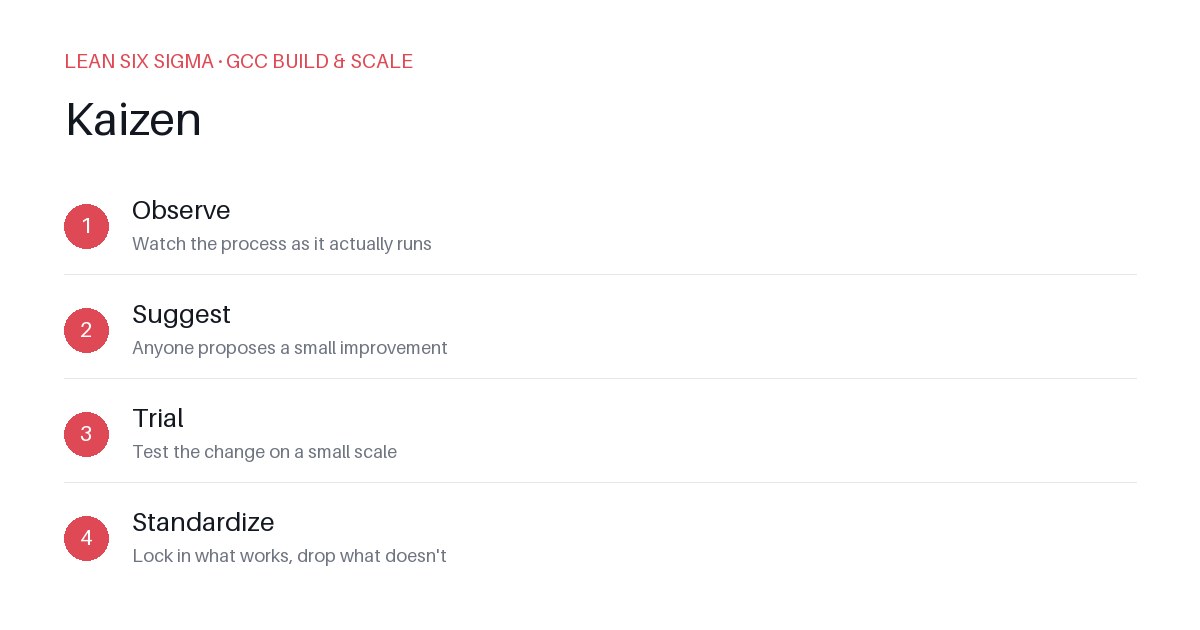
Downloadable templates
Small, consistent improvements beat big, rare overhauls in distributed GCCs. Here’s how to make Kaizen a daily habit, not an annual event.
The Problem With Big-Bang Kaizen Events
Most GCCs treat Kaizen as a quarterly initiative. A facilitator arrives, teams spend three days mapping processes, and then everyone returns to their desks. Six months later, the old bottlenecks are back. This approach fails because it relies on external momentum and ignores the reality of distributed work.
In a distributed GCC, you don’t have the luxury of a shared physical space to sustain momentum. You need habits that work across time zones and communication tools.
Start With the 5S Digital Audit
Before you fix a process, you must reduce noise. Start every sprint with a 5S audit of your digital workspace.
- Sort: Archive old Slack channels and obsolete Confluence pages.
- Set in Order: Standardize naming conventions for all shared drives.
- Sharpen: Remove redundant approval steps in your Jira workflow.
- Standardize: Create a single source of truth for SOPs.
- Sustain: Assign a rotating "5S owner" for each two-week sprint.
This isn’t about cleaning your desk. It’s about ensuring your team spends time solving problems, not hunting for information.
Implement the "One-Thing" Rule
Perfection is the enemy of Kaizen. In distributed teams, decision fatigue is real. Every team member should identify one specific, small improvement to make weekly.
- Identify: Pick one repetitive task that causes friction.
- Experiment: Try a new tool or shortcut for two weeks.
- Measure: Track time saved or error reduction.
- Standardize: If it works, document it and share it with the wider GCC.
This approach keeps improvements manageable and ensures everyone feels ownership.
Use Visual Management Across Time Zones
You cannot manage what you cannot see. Distributed teams need visual management that transcends time zone barriers.
- Kanban Boards: Use a shared board to track process improvements, not just tasks.
- Daily Stand-ups: Keep them async-friendly. Post updates in a designated channel.
- Weekly Reviews: Review metrics and celebrate small wins every Friday.
Visual management ensures that progress is transparent and accountability is clear.
Train the Team to Be Problem-Solvers
Kaizen is a mindset, not a tool. Your GCC must train its members to identify waste and propose solutions.
- Daily Huddles: Spend five minutes discussing one problem.
- Root Cause Analysis: Use the 5 Whys technique to dig deeper.
- Action Planning: Assign an owner and a deadline for each solution.
By making problem-solving a daily habit, you create a culture of continuous improvement.
Measure What Matters
If you do not measure it, it will not improve. Track the following metrics:
- Time to Resolution: How quickly are process issues addressed?
- Employee Engagement: Are team members suggesting improvements?
- Quality Metrics: Are defects and errors decreasing?
Regular measurement ensures that your Kaizen efforts are delivering tangible results.
Comments
Be the first to comment on this post.
Sign in to leave a comment.