Using DMAIC to Fix GCC Onboarding Delays
September 4, 2026
Like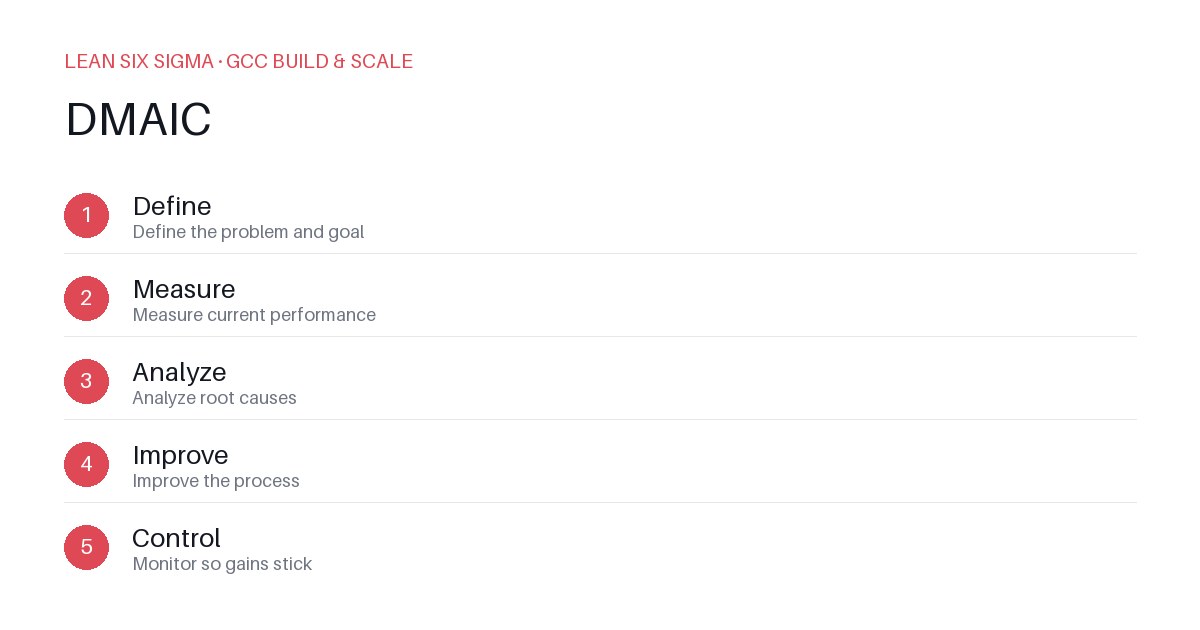
Downloadable templates
A practical walkthrough of applying DMAIC to real GCC build-and-scale work.
Using DMAIC to Fix GCC Onboarding Delays
Why DMAIC Matters for GCC Teams
Scaling a Global Capability Center means standardizing work across sites, handoffs, and teams that have never worked together before. In this environment, ad-hoc fixes create more confusion than they resolve. DMAIC gives you a shared vocabulary and a repeatable sequence for diagnosing and fixing process bottlenecks. When applied to onboarding delays, it shifts the focus from blaming individuals to improving the system that creates the delays.
The DMAIC Sequence
- Define — Define the problem and goal
- Measure — Measure current performance
- Analyze — Analyze root causes
- Improve — Improve the process
- Control — Monitor so gains stick
Applying It to Onboarding Delays
Start small: pick one recurring pain point your GCC team hits every week, and walk it through these 5 steps before rolling the approach out more broadly.
Step 1: Define the Problem Clearly
Vague problems yield vague solutions. Instead of saying “onboarding is slow,” define it with specificity. For example: “New analysts take an average of 12 business days to reach full productivity, which is 4 days longer than the target of 8 days.” This creates a measurable baseline and sets clear success criteria for your improvement effort.
Step 2: Measure Current Performance
Collect data to understand the current state. Track metrics such as time-to-first-task, days until first deliverable, and the number of escalations or support tickets raised during the onboarding period. Interview both new hires and their mentors to capture qualitative insights. This step ensures you’re solving the right problem and not just treating symptoms.
Step 3: Analyze Root Causes
Use tools like the 5 Whys or a fishbone diagram to dig beneath the surface. Are delays caused by delayed access provisioning? Overloaded mentors? Unclear role expectations? Inconsistent documentation? Identifying the true root causes prevents you from implementing temporary fixes that fail under pressure.
Step 4: Improve the Process
Design targeted interventions based on your analysis. If access delays are the culprit, automate provisioning workflows. If mentor capacity is stretched, implement a buddy system or create a self-service knowledge base. Pilot these changes with a small group, gather feedback, and refine before full rollout.
Step 5: Control and Sustain Gains
Embed monitoring into your daily operations. Track onboarding metrics in a dashboard visible to all stakeholders. Assign owners for each control measure and conduct regular reviews. This ensures that improvements are not lost to organizational drift and that the process continues to evolve with the team’s needs.
Applying It
Start small: pick one recurring pain point your GCC team hits every week, and walk it through these 5 steps before rolling the approach out more broadly. Download the template below to run your first pass.
Comments
Be the first to comment on this post.
Sign in to leave a comment.