Using DMAIC to Fix GCC Onboarding Delays
September 12, 2026
Like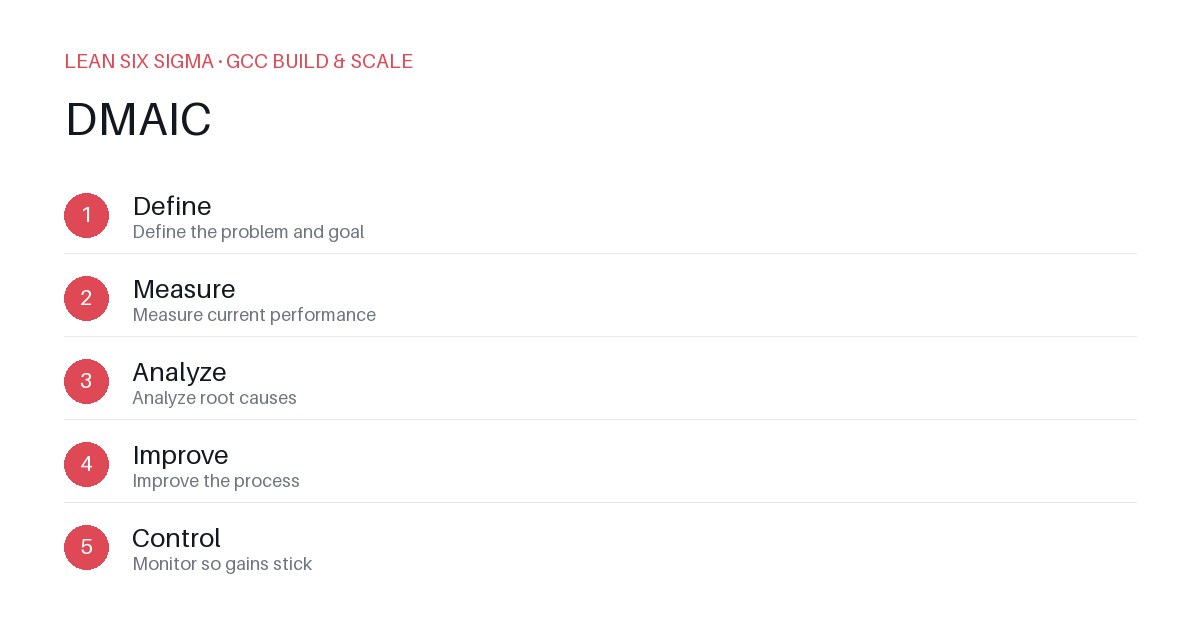
Downloadable templates
A practical walkthrough of applying DMAIC to real GCC build-and-scale work.
Using DMAIC to Fix GCC Onboarding Delays
Why DMAIC Matters for GCC Teams
Scaling a Global Capability Center (GCC) means standardizing work across sites, handoffs, and teams that have never worked together before. In this environment, onboarding delays are not just an HR metric — they’re a bottleneck that ripples into project delivery, team morale, and client trust. DMAIC gives you a shared vocabulary and a repeatable sequence for diagnosing and resolving those delays systematically. Instead of applying quick fixes that fade after a few weeks, DMAIC helps GCC leaders build durable process improvements that scale.
The DMAIC Sequence
- Define — Define the problem and goal
- Measure — Measure current performance
- Analyze — Analyze root causes
- Improve — Improve the process
- Control — Monitor so gains stick
Applying It
Start small: pick one recurring pain point your GCC team hits every week, and walk it through these 5 steps before rolling the approach out more broadly. Download the template below to run your first pass.
Step 1: Define — Pinpoint the Onboarding Delay
Before you can fix onboarding delays, you must clearly articulate what “delay” means in your context. Is it the time from offer acceptance to first day? From first day to productive contribution? From hiring manager approval to system access provisioned?
Define your scope with precision. For example:
“Onboarding delay is defined as the number of business days between a new hire’s start date and the date they complete their initial project assignment and receive their first performance check-in.”
Also define success criteria. What does “fixed” look like? Reduce average onboarding time from 14 to 7 days? Cut the percentage of hires taking longer than 10 days from 40% to under 15%? Clear definitions prevent scope creep and keep the team aligned.
Step 2: Measure — Quantify the Current State
You can’t improve what you don’t measure. Gather data from HRIS, project management tools, and direct feedback from new hires and hiring managers.
Track metrics such as:
- Average days from offer to start
- Days to complete required training modules
- Time to system access provisioning
- Days until first meaningful deliverable
Use a simple dashboard or spreadsheet to baseline these numbers over the last 3–6 months. Segment by site, function, or hiring manager to spot patterns. For instance, you might discover that onboarding delays in the APAC region average 12 days, while EMEA averages 6 — a clue that regional process variations are at play.
Step 3: Analyze — Uncover Root Causes
Now dig into why the delays are happening. Use tools like the 5 Whys, fishbone diagrams, or process mapping to trace delays back to their source.
Common root causes in GCC onboarding include:
- Manual handoffs between HR, IT, and hiring managers
- Inconsistent checklists across sites
- Lack of designated onboarding buddies
- System access requests stuck in approval queues
- Training materials that are outdated or inaccessible
Interview stakeholders: new hires, hiring managers, IT support, and HR coordinators. Ask: “What slows you down most?” “Where do things get stuck?” “What would make your job easier?”
Map the current process visually. You’ll often see bottlenecks where work sits idle waiting for someone else to act — a classic symptom of poor handoff design.
Step 4: Improve — Design and Implement Solutions
Armed with insights, design targeted improvements. Prioritize quick wins that deliver visible impact, but also plan structural changes for lasting effect.
Examples:
- Create a standardized onboarding checklist with assigned owners and deadlines
- Automate system access requests via integration with HRIS
- Assign onboarding buddies to each new hire for the first two weeks
- Consolidate training into a single, accessible portal with progress tracking
- Implement weekly onboarding syncs for hiring managers to flag blockers
Pilot the changes with a small group — perhaps one site or one department. Gather feedback, measure results, and refine before scaling.
Step 5: Control — Sustain the Gains
Improvements fade without oversight. Embed monitoring into your regular operations.
Assign an owner for each process improvement. Track onboarding metrics monthly. Review trends in GCC leadership meetings. Celebrate wins publicly to reinforce accountability.
Set up alerts for when onboarding time exceeds your target threshold. Use control charts or simple dashboards to monitor performance over time. If delays creep back up, trigger a mini-DMAIC cycle to address the new issue.
Final Thought
DMAIC isn’t a one-time project — it’s a mindset. By applying this structured approach to GCC onboarding delays, you build a culture of continuous improvement that scales across teams, regions, and functions. Start small, measure rigorously, and let data drive your next move.
Comments
Be the first to comment on this post.
Sign in to leave a comment.