Using DMAIC to Fix GCC Onboarding Delays
October 10, 2026
Like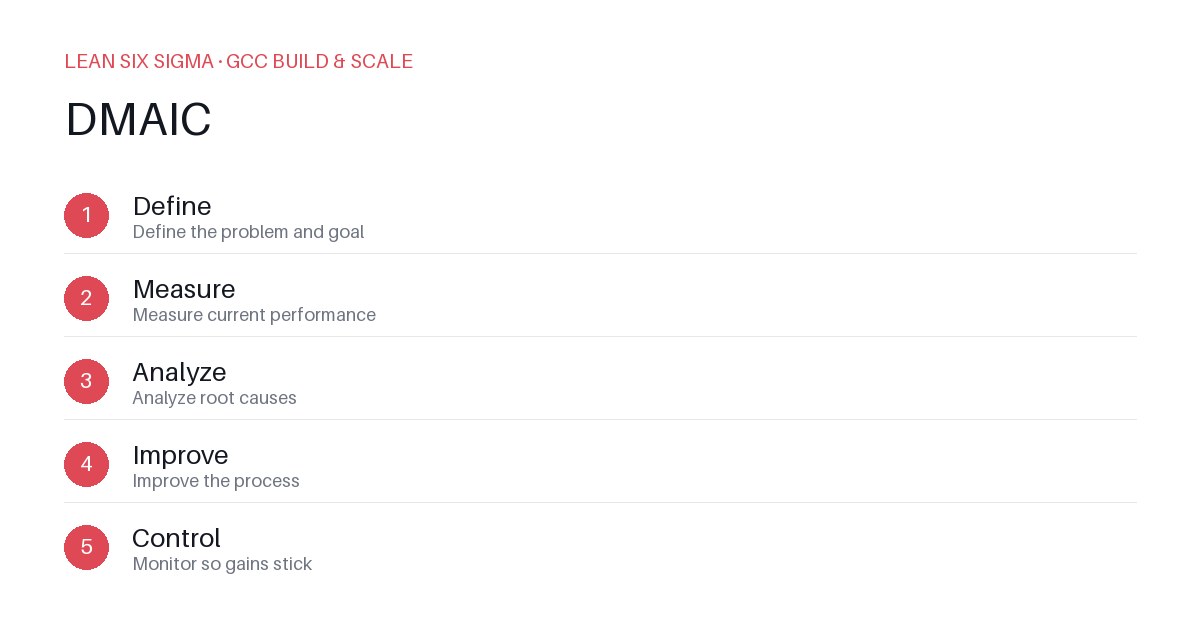
Downloadable templates
A practical walkthrough of applying DMAIC to real GCC build-and-scale work.
Using DMAIC to Fix GCC Onboarding Delays
Why DMAIC Matters for GCC Teams
Scaling a Global Capability Center means standardizing work across sites, handoffs, and teams that have never worked together before. When onboarding becomes a bottleneck, it doesn’t just delay individual contributors—it ripples into project timelines, team morale, and overall capability maturity. DMAIC gives you a shared vocabulary and a repeatable sequence for diagnosing and resolving those delays without relying on tribal knowledge or ad-hoc fixes.
The DMAIC Sequence
- Define — Define the problem and goal
- Measure — Measure current performance
- Analyze — Analyze root causes
- Improve — Improve the process
- Control — Monitor so gains stick
Applying It
Start small: pick one recurring pain point your GCC team hits every week, and walk it through these 5 steps before rolling the approach out more broadly. Download the template below to run your first pass.
Defining the Onboarding Delay Problem
In the Define phase, clarity is everything. Instead of saying “onboarding is slow,” specify: “New hires in GCC Site B take 14 days to reach productive status, compared to the target of 7 days.” Include scope, stakeholders, success criteria, and what “productive” actually means in your context. This prevents vague debates later and keeps the team focused on a measurable outcome.
Measuring Current Performance
Before you can improve, you must quantify. In the Measure phase, collect baseline data: time from hire to first task assignment, days until system access is provisioned, number of required approvals, average wait time for mentor pairing, and any drop-off points where new hires stall. Use time-stamped logs, survey responses, and HRIS data. This step often reveals hidden bottlenecks—like a single IT ticket queue that delays access for weeks.
Analyzing Root Causes
With data in hand, move to Analyze. Map the current state using a process flow or value stream. Look for delays, rework, handoff friction, or dependency gaps. Common root causes in GCC onboarding include: duplicated training materials, unclear ownership of setup tasks, lack of standardized checklists, or misaligned expectations between HR, IT, and site leads. Use tools like 5 Whys or fishbone diagrams to separate symptoms from systemic issues.
Improving the Process
The Improve phase is where you design and test solutions. Prioritize high-impact, low-effort changes first: automate access provisioning, create a single source of truth for onboarding tasks, assign a dedicated onboarding coordinator, or standardize the first-week agenda. Run a pilot with one cohort, measure results, and iterate. Avoid over-engineering—simplicity and consistency beat complexity every time in global capability centers.
Controlling and Sustaining Gains
Finally, Control ensures improvements don’t regress. Implement dashboards tracking onboarding cycle time, completion rates, and new hire feedback. Embed check-ins into regular team rituals. Assign ownership of the process to a process owner who can escalate deviations. Continuous monitoring turns one-time fixes into lasting capability.
Next Steps
This post is too short for good SEO. Expand it to 400-600 words by adding concrete detail, examples, or steps relevant to its EXISTING topic — do not change its existing meaning or invent claims unrelated to it. Keep any existing Markdown headings and build on them; add more '## ' subheadings if useful. Output ONLY the full expanded Markdown content, nothing else.
Comments
Be the first to comment on this post.
Sign in to leave a comment.