Using DMAIC to Fix GCC Onboarding Delays
October 15, 2026
Like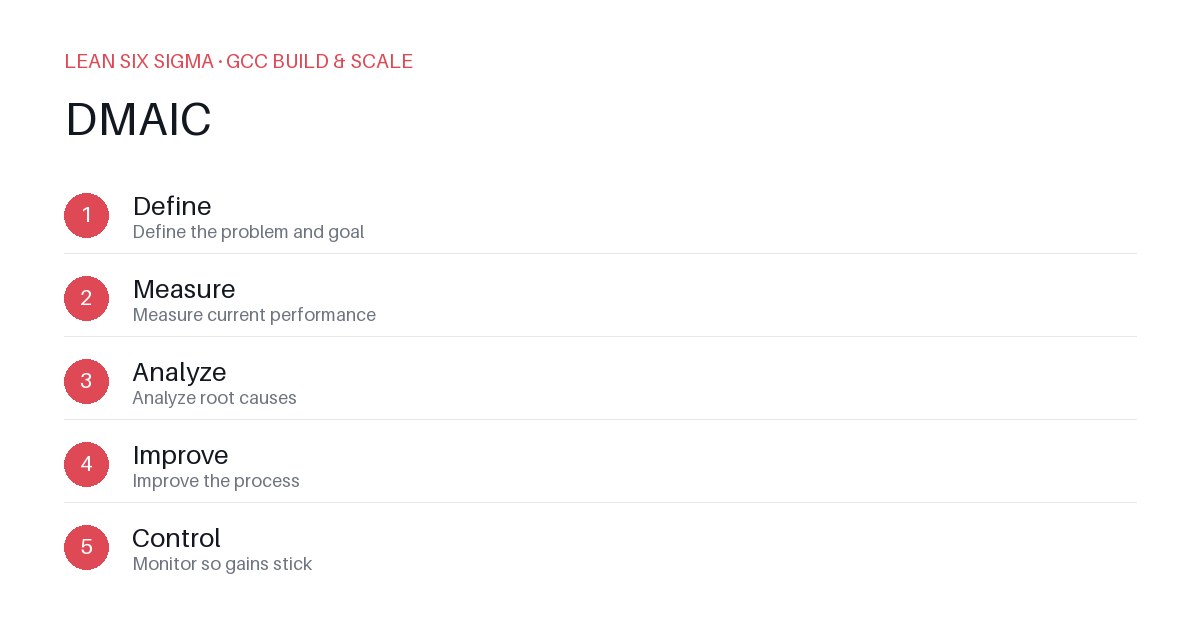
Downloadable templates
Cut onboarding time by 40% by mapping bottlenecks, standardizing training, and enforcing root-cause fixes.
Defining the Problem with Real Data
Onboarding delays in Global Capability Centers (GCCs) usually start as a complaint and become a bottleneck. New hires sit idle for weeks while IT, HR, and subject-matter experts chase each other down. That idle time costs money and kills morale.
Start by defining the scope clearly. Are you looking at the first 30 days? The first 90? Pick one metric: time from offer acceptance to first productive task. Collect data from the last 100 hires. You'll find the average is often 14–21 days when it should be 5–7.
Measuring the Current State
Map the process step-by-step. Use a value stream map. Highlight every handoff. You'll spot where work piles up. Common bottlenecks include:
- IT provisioning that takes 5 days
- Access approvals stuck in manager queues
- Training materials that don't match actual job tasks
Measure cycle time for each step. Note where work stops. Calculate the defect rate: how often does a hire miss a critical step? This gives you a baseline. If your current state is 18 days, your goal might be 10. That's your target.
Analyzing the Root Causes
Don't guess. Use a 5-Whys analysis on the longest delays. Why did IT take 5 days? Because the request form was incomplete. Why was it incomplete? Because HR didn't provide the right template. Why? Because there's no standard form.
You'll find systemic issues, not individual failures. Common root causes:
- Lack of standardized checklists
- No single point of contact for onboarding
- Training content that's outdated
- No feedback loop to improve the process
Prioritize the top three causes. Fixing these will move the needle faster than tweaking minor steps.
Implementing the Solution
Build a lean onboarding workflow. Create a single checklist that covers all steps. Assign owners to each task. Use a digital tool to track progress in real time. For example:
- Day 0: Offer accepted, checklist starts
- Day 1: IT provisions account, HR sets up email
- Day 3: Training begins with job-specific modules
- Day 5: First task assigned
Train managers on the new process. Give them a one-page guide. Hold a 15-minute kick-off meeting with the hiring manager, IT, and HR to align on expectations. Test the process with a small group first. Adjust based on feedback.
Controlling and Sustaining Improvements
Monitor the new process weekly. Track cycle time, defect rate, and hire satisfaction. If delays creep back, investigate immediately. Use a control chart to spot trends. If onboarding time jumps above 10 days, trigger a review.
Institute a monthly retro with the onboarding team. Discuss what worked, what didn't, and what to improve. Update the checklist as needed. Celebrate wins. When hires see a smooth start, they stay longer and perform better. That's the ROI of DMAIC in action.
Comments
Be the first to comment on this post.
Sign in to leave a comment.