Using DMAIC to Fix GCC Onboarding Delays
October 27, 2026
Like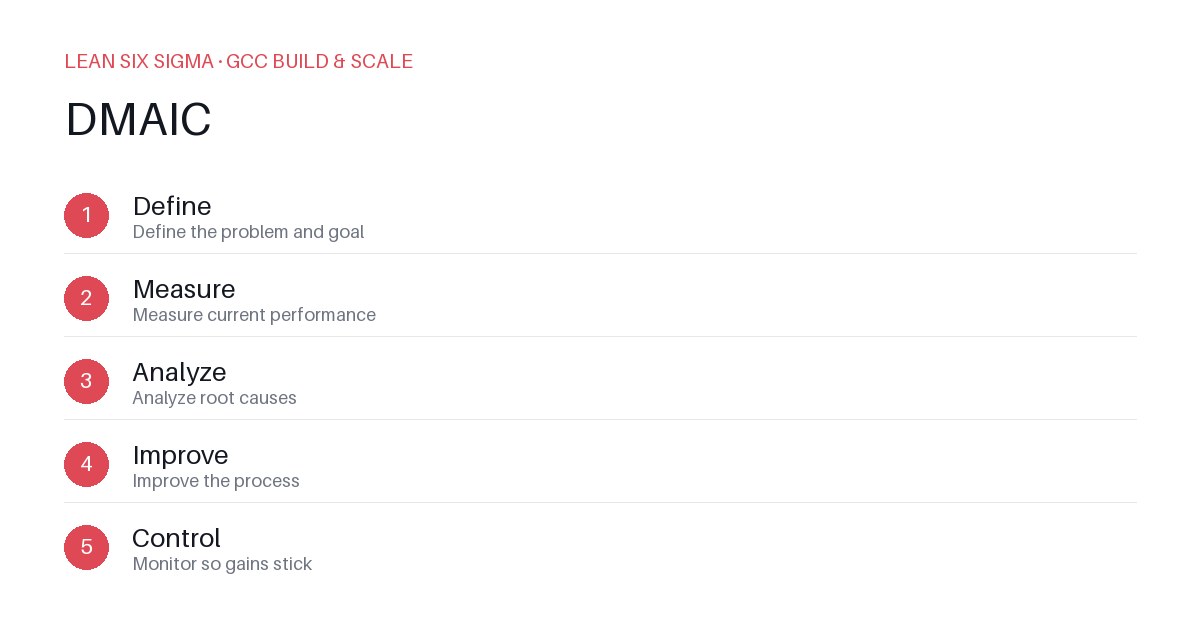
Downloadable templates
A practical walkthrough of applying DMAIC to real GCC build-and-scale work.
Using DMAIC to Fix GCC Onboarding Delays
Why DMAIC Matters for GCC Teams
Scaling a Global Capability Center (GCC) means standardizing work across sites, handoffs, and teams that have never worked together before. In fast-moving organizations, onboarding delays often become the silent bottleneck that slows down delivery, increases burnout, and erodes stakeholder trust. DMAIC gives you a shared vocabulary and a repeatable sequence for diagnosing and fixing those delays without reinventing the wheel each time.
Rather than applying ad-hoc fixes, DMAIC forces teams to step back, measure reality, identify systemic root causes, implement targeted improvements, and lock in sustainable control mechanisms. This structured approach is especially valuable in GCC environments where processes are distributed, cultural nuances vary, and handoff points are numerous.
The DMAIC Sequence
- Define — Define the problem and goal
- Measure — Measure current performance
- Analyze — Analyze root causes
- Improve — Improve the process
- Control — Monitor so gains stick
Applying It
Start small: pick one recurring pain point your GCC team hits every week, and walk it through these 5 steps before rolling the approach out more broadly. Download the template below to run your first pass.
Deep Dive: Each Phase in Practice
Define: Pinpoint the Exact Problem
Don’t start by solving everything. Start by naming one specific onboarding delay. For example: “New hires in the GCC analytics team take an average of 14 days to complete their first independent task, compared to the target of 7 days.”
Use SMART criteria: Specific, Measurable, Achievable, Relevant, Time-bound. Include who is affected, what the impact is (e.g., delayed project milestones, increased mentor workload), and why it matters to the GCC’s mission.
Measure: Gather Baseline Data
You can’t improve what you don’t measure. Collect quantitative and qualitative data from the last 30–60 days. Track:
- Time from offer acceptance to first task completion
- Number of training modules completed per week
- Number of escalations or blockers reported
- Mentor availability and response times
- System access provisioning delays
Use existing tools like Jira, ServiceNow, or internal HRIS platforms. Supplement with short surveys or 1:1 interviews with new hires and their mentors to capture the “why” behind the numbers.
Analyze: Uncover Root Causes
Don’t stop at symptoms. Use tools like the 5 Whys, fishbone diagrams, or value stream mapping to trace delays back to their source. Common root causes in GCC onboarding include:
- Lack of standardized onboarding checklists
- Overloaded mentors with no capacity planning
- Siloed knowledge repositories that force reinvention
- Delayed system provisioning due to IT bottlenecks
- Unclear success criteria for “ready to work”
Identify which factors have the highest impact and are within your team’s control. Prioritize fixes that yield the greatest return with the least disruption.
Improve: Design and Test Solutions
Brainstorm targeted interventions based on your analysis. Examples:
- Create a single source-of-truth onboarding playbook with embedded videos, FAQs, and decision trees
- Implement a mentor rotation schedule to prevent burnout
- Automate system access requests through an integrated ticketing workflow
- Introduce “onboarding champions” who support new hires during peak periods
Run pilot programs with a small group. Track results against your baseline metrics. Iterate quickly based on feedback.
Control: Sustain the Gains
Improvements fade without monitoring. Establish:
- KPI dashboards visible to all GCC leaders
- Monthly reviews of onboarding metrics
- Ownership assigned for each process step
- Continuous feedback loops from new hires and mentors
- Regular audits to ensure compliance with updated standards
Document everything. Train new team members on the improved process. Celebrate wins to reinforce cultural adoption.
Next Steps
DMAIC isn’t a one-time project—it’s a mindset. Apply it rigorously to one onboarding bottleneck, prove its value, then scale. The template below provides a ready-to-use framework to begin your first DMAIC cycle.
Comments
Be the first to comment on this post.
Sign in to leave a comment.