Value Stream Mapping a GCC Shared Services Handoff
September 5, 2026
Like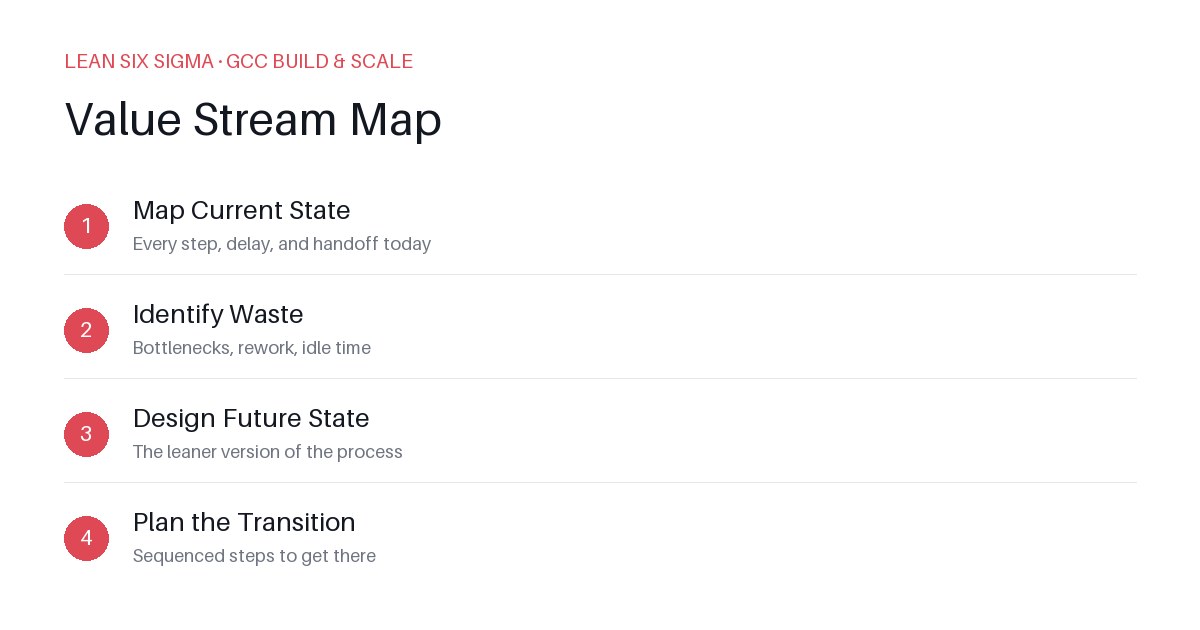
Downloadable templates
A practical walkthrough of applying Value Stream Map to real GCC build-and-scale work.
Value Stream Mapping a GCC Shared Services Handoff
Why Value Stream Map Matters for GCC Teams
Scaling a Global Capability Center means standardizing work across sites, handoffs, and teams that have never worked together before. Value Stream Map gives you a shared vocabulary and a repeatable sequence for doing that.
The Value Stream Map Sequence
- Map Current State — Every step, delay, and handoff today
- Identify Waste — Bottlenecks, rework, idle time
- Design Future State — The leaner version of the process
- Plan the Transition — Sequenced steps to get there
Applying It
Start small: pick one recurring pain point your GCC team hits every week, and walk it through these 4 steps before rolling the approach out more broadly. Download the template below to run your first pass.
Deep Dive into the Value Stream Map Sequence
Step 1: Map Current State
To begin, you need to capture the current state of your GCC handoff process. This involves documenting every single step, from the initial request to the final delivery. Pay close attention to delays and handoffs, as these are often where inefficiencies hide. Use tools like flowcharts or swimlane diagrams to visualize the process. This step is crucial because it provides a baseline for comparison and helps identify areas for improvement.
Step 2: Identify Waste
Once you have a clear picture of the current state, the next step is to identify waste. Waste can take many forms, including bottlenecks, rework, idle time, and unnecessary steps. For example, if a handoff requires multiple approvals that can be consolidated, that’s a potential area for improvement. Use techniques like the 5 Whys or root cause analysis to dig deeper into why these wastes exist.
Step 3: Design Future State
With the waste identified, you can now design the future state of your process. This involves streamlining the steps, eliminating redundancies, and optimizing handoffs. For instance, if you’ve identified that a particular approval step is causing delays, you might consider automating it or assigning it to a different role. The goal is to create a leaner, more efficient process that reduces cycle time and improves quality.
Step 4: Plan the Transition
Finally, you need to plan the transition from the current state to the future state. This involves breaking down the changes into manageable steps and assigning responsibilities. It’s important to involve stakeholders early in the process to ensure buy-in and smooth implementation. Use a phased approach, starting with quick wins and building momentum. Monitor the progress closely and make adjustments as needed.
Practical Example: Streamlining a GCC Handoff
Consider a GCC team that handles software deployment requests. Currently, the process involves multiple handoffs between development, QA, and operations teams, leading to delays and rework. By mapping the current state, the team identifies that the QA approval step is a bottleneck. In the future state, they might automate the QA checks and implement a continuous integration pipeline. The transition plan could include training sessions, pilot runs, and regular feedback loops to ensure the new process is effective.
Conclusion
Value Stream Mapping is a powerful tool for GCC teams looking to improve their handoff processes. By following the four-step sequence, teams can identify inefficiencies, design leaner processes, and plan for successful transitions. Start small, focus on one pain point, and use the template to guide your efforts. As you refine your process, you’ll see improvements in efficiency, quality, and team satisfaction.
Comments
Be the first to comment on this post.
Sign in to leave a comment.