Value Stream Mapping a GCC Shared Services Handoff
September 24, 2026
Like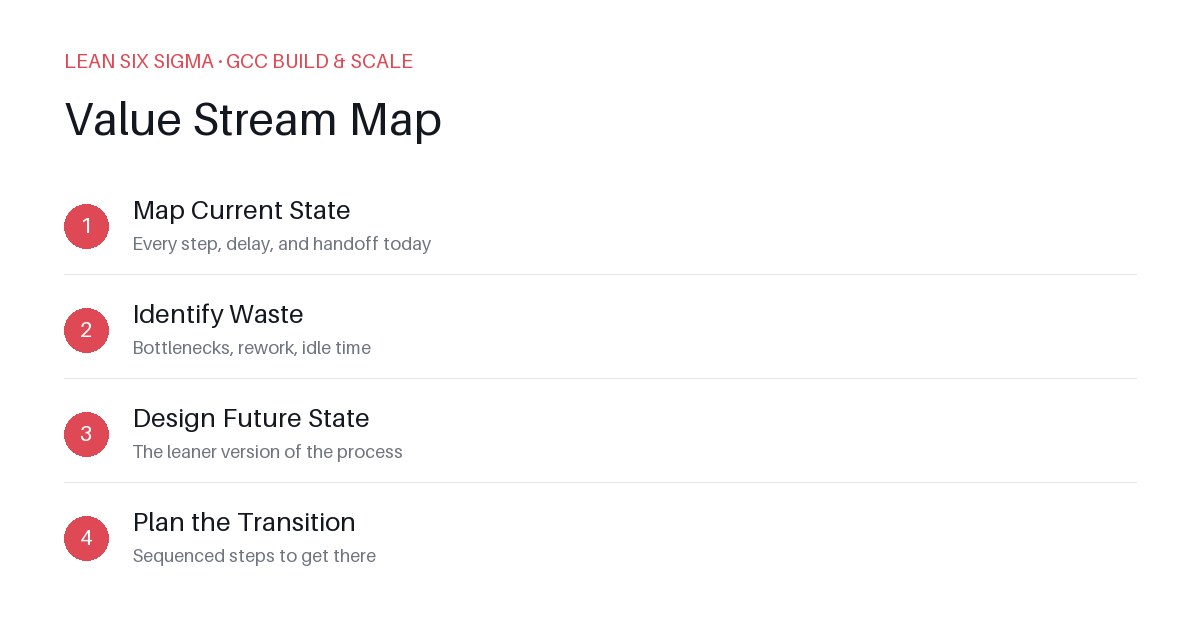
Downloadable templates
A practical walkthrough of applying Value Stream Map to real GCC build-and-scale work.
Why Value Stream Map Matters for GCC Teams
Scaling a Global Capability Center means standardizing work across sites, handoffs, and teams that have never worked together before. Value Stream Map gives you a shared vocabulary and a repeatable sequence for doing that. In GCC environments, where work is often distributed across regions and time zones, the handoff between teams can introduce significant delays, miscommunication, and rework. Without a clear visual representation of how work flows from initiation to completion, it becomes difficult to identify where value is being lost or where bottlenecks are occurring. By mapping the value stream, GCC teams can create transparency around their processes, align stakeholders on expectations, and establish a baseline for continuous improvement. This approach not only enhances operational efficiency but also fosters a culture of accountability and collaboration across the organization.
The Value Stream Map Sequence
-
Map Current State — Every step, delay, and handoff today
Begin by documenting each activity involved in delivering a service or product within your GCC. Include not only the work performed by your team but also the handoffs to other teams, approvals, reviews, and any waiting periods. Use swimlanes to represent different roles or departments, and add time stamps or durations to each step. This detailed view helps reveal hidden complexities and ensures that everyone involved understands the full scope of the process. -
Identify Waste — Bottlenecks, rework, idle time
Once the current state is clearly mapped, analyze the flow to spot areas where value is not being created. Look for steps that do not add value to the end customer, such as redundant approvals, excessive documentation, or manual data entry. Identify where work piles up due to capacity constraints or unclear responsibilities. Highlight instances of rework caused by miscommunication or quality issues. This analysis forms the foundation for designing a more efficient process. -
Design Future State — The leaner version of the process
Based on the waste identified, redesign the process to eliminate non-value-adding activities and streamline handoffs. Consider consolidating steps, automating repetitive tasks, or reassigning responsibilities to improve flow. Ensure that the future state aligns with business goals and includes clear ownership for each activity. Visualize the new process using the same swimlane format to make comparisons straightforward. This step is critical for gaining buy-in from stakeholders, as it provides a tangible vision of what improvement looks like. -
Plan the Transition — Sequenced steps to get there
Implementing the future state requires a structured approach to minimize disruption. Break down the transition into manageable phases, prioritizing quick wins that deliver immediate value. Assign owners for each change and define success metrics to track progress. Communicate the plan clearly to all involved teams and provide training or support as needed. Monitor the implementation closely and be prepared to adjust based on feedback. This phased approach ensures that improvements are sustainable and that the team remains aligned throughout the change.
Applying It
Start small: pick one recurring pain point your GCC team hits every week, and walk it through these 4 steps before rolling the approach out more broadly. For example, if your team frequently experiences delays in receiving approvals from legal, map that specific handoff and analyze where the delays occur. Use the insights gained to design a more efficient approval process, perhaps by clarifying requirements upfront or introducing a digital workflow tool. Download the template below to run your first pass. By focusing on a single process, you can demonstrate the value of value stream mapping and build momentum for broader adoption across your GCC.
Comments
Be the first to comment on this post.
Sign in to leave a comment.