5S for GCC Workspace and Digital Hygiene
September 23, 2026
Like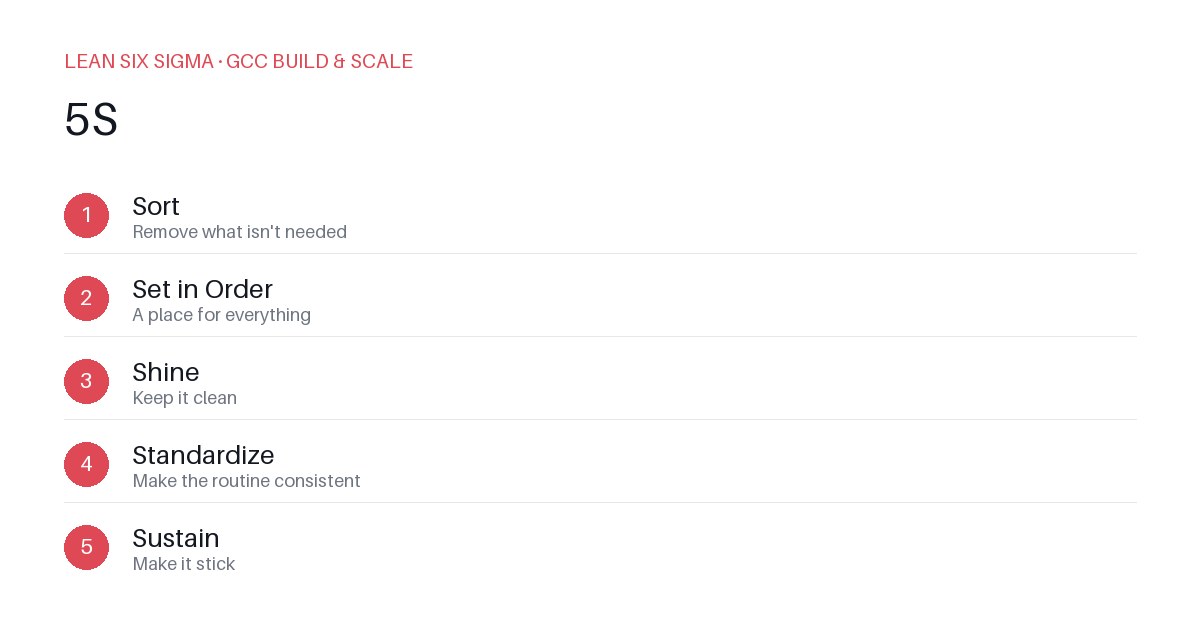
Downloadable templates
Cut search time and cognitive load in your GCC by applying 5S to physical desks and digital workspaces.
The Cost of Digital Clutter
In a Global Capability Center, speed is the product. When analysts, engineers, or operations staff spend ten minutes hunting for the right template, dataset, or approval workflow, that’s lost capacity. We see this daily: duplicated folders, abandoned shared drives, and desktops buried under temporary files. This isn’t just messy — it’s a bottleneck.
5S, originally from Toyota’s production systems, is a methodology for organizing workspaces. In a GCC context, it applies equally to physical desks and digital environments. The framework is simple: Sort, Set in Order, Shine, Standardize, Sustain. The impact is measurable.
Sort: Eliminate What Doesn’t Serve the Workflow
Start by removing anything that doesn’t directly support the current project or role. In physical spaces, this means clearing off unnecessary hardware, personal items, and outdated reference materials. In digital spaces, it’s about purging old files, archiving inactive projects, and deleting duplicate templates.
Action steps:
- Conduct a weekly 15-minute “digital purge” where team members delete or archive files older than 90 days that aren’t actively referenced.
- Use naming conventions that reflect project codes and version numbers. Example:
GCC-2024-Q3-ProcessOptimization_v2.xlsx. - Remove unused software licenses and desktop shortcuts. If it hasn’t been used in 30 days, move it to a “Review Later” folder.
Set in Order: Design for Intuitive Access
Once clutter is removed, organize what remains so that tools and resources are found without searching. In physical spaces, this means assigning a designated spot for every item — calipers, clipboards, reference guides. In digital spaces, it’s about structured folders, clear navigation, and consistent labeling.
Action steps:
- Create a master folder structure that mirrors the GCC’s operational workflow. Example:
01_Inbox,02_ActiveProjects,03_Completed,04_Archive. - Use color-coded tags or labels in tools like SharePoint or Confluence to denote status (e.g., green for active, red for pending review).
- Assign “owners” for each folder or workspace. Accountability reduces drift.
Shine: Maintain Visibility and Readability
Shine means keeping the workspace clean and visible. In physical spaces, this is straightforward: wipe down desks, organize cables, and ensure lighting is adequate. In digital spaces, it’s about clear documentation, updated README files, and consistent formatting.
Action steps:
- Require a README.md file in every shared folder that explains its purpose, contents, and access rules.
- Use consistent formatting across documents — same fonts, headings, and template styles.
- Schedule monthly “digital shine” sessions where teams review and update documentation.
Standardize: Create Repeatable Processes
Standardization ensures that the organized state is maintained across the GCC. This involves documenting procedures, creating checklists, and training teams on the expected standards.
Action steps:
- Develop a “Digital Workspace Checklist” that teams complete during onboarding and quarterly reviews.
- Use automated tools to enforce naming conventions and folder structures.
- Create SOPs for file management, including retention policies and deletion procedures.
Sustain: Build Accountability and Continuous Improvement
The final S is the hardest. Without ongoing effort, clutter returns. Sustain requires leadership support, regular audits, and a culture that values order.
Action steps:
- Assign a “5S Champion” in each team responsible for maintaining standards.
- Conduct quarterly audits with scorecards to track compliance and identify improvement areas.
- Recognize and reward teams that consistently maintain high standards.
Bottom Line
5S isn’t about perfection — it’s about reducing friction. In a GCC, every minute saved on finding tools or templates is a minute gained on value delivery. Start small, apply the framework consistently, and watch productivity climb.
Comments
Be the first to comment on this post.
Sign in to leave a comment.