5S for GCC Workspace and Digital Hygiene
September 29, 2026
Like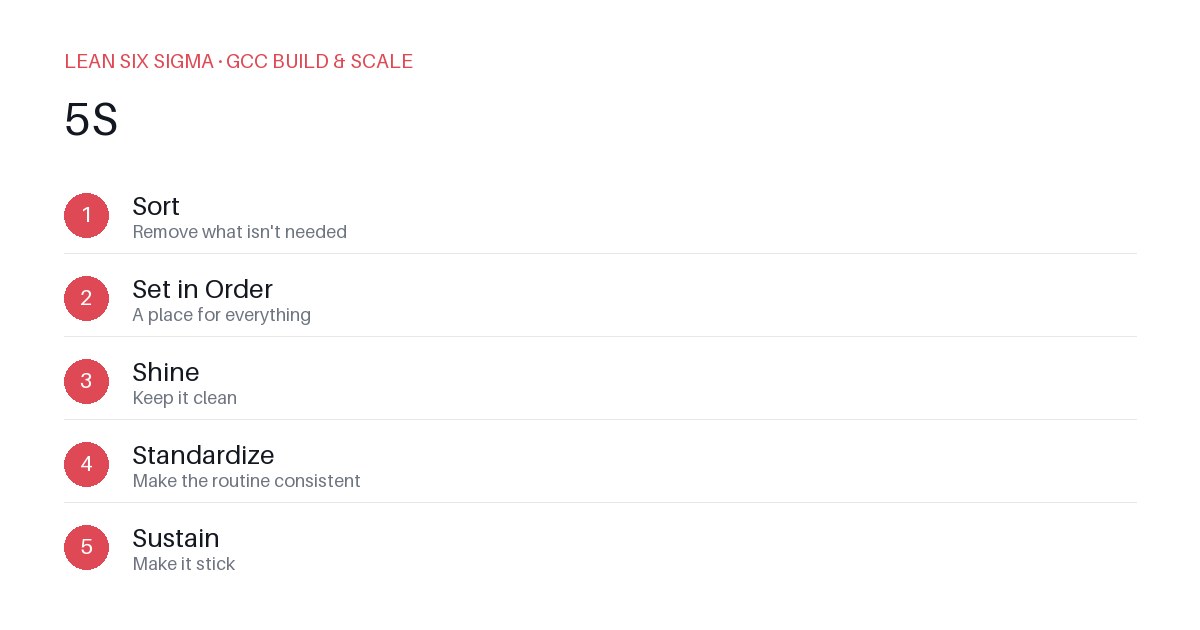
Downloadable templates
A practical walkthrough of applying 5S to real GCC build-and-scale work.
5S for GCC Workspace and Digital Hygiene
Why 5S Matters for GCC Teams
Scaling a Global Capability Center means standardizing work across sites, handoffs, and teams that have never worked together before. 5S gives you a shared vocabulary and a repeatable sequence for doing that. In a GCC environment, where processes are often inherited, fragmented, or heavily reliant on tribal knowledge, 5S acts as a diagnostic and organizational framework. It moves teams from chaotic, ad-hoc workflows to structured, sustainable operating rhythms. By applying 5S to both physical workspaces and digital environments, GCCs can reduce friction, improve collaboration, and create a culture of continuous improvement.
The 5S Sequence
- Sort — Remove what isn't needed
- Set in Order — A place for everything
- Shine — Keep it clean
- Standardize — Make the routine consistent
- Sustain — Make it stick
Each step builds on the last, creating a compounding effect of clarity and efficiency.
Applying It
Start small: pick one recurring pain point your GCC team hits every week, and walk it through these 5 steps before rolling the approach out more broadly. Download the template below to run your first pass.
Deep Dive: 5S in Practice for GCCs
Sort: Eliminate Clutter and Distraction
In a GCC context, “sorting” means identifying and removing tools, documents, meetings, and processes that no longer serve the team’s objectives. For example, if your team maintains multiple shared drives with overlapping folders, duplicate templates, and outdated SOPs, sorting involves auditing those assets and deleting or archiving what’s obsolete. Similarly, if your weekly sync includes updates from teams that no longer impact your workflow, remove them. Sorting isn’t just about tidying up — it’s about freeing cognitive bandwidth for high-value work.
Set in Order: Create Intuitive Workflows
Once clutter is removed, assign a logical, consistent home for everything that remains. In digital hygiene, this means establishing clear naming conventions, folder structures, and access permissions. For instance, use a standardized template library with version-controlled documents, or implement a single source of truth for project trackers. In physical spaces, label drawers, bins, and stations so that tools and materials are instantly locatable. When every item has a designated place, handoffs become smoother and onboarding new team members is significantly faster.
Shine: Maintain Visibility and Accountability
“Shine” means keeping your workspace — physical or digital — clean and visible. In a GCC, this translates to regular audits of shared resources: cleaning up stale comments in project management tools, removing expired access links, and ensuring dashboards are up to date. A clean digital environment reduces errors and builds trust. Visually, a tidy desk or organized screen real estate signals professionalism and focus. Schedule brief, recurring “shine” sessions — like a 15-minute end-of-week reset — to keep momentum.
Standardize: Build Repeatable Processes
Standardization turns good practices into habit. Document the workflows you’ve refined during Sort, Set in Order, and Shine. Create checklists, runbooks, and quick-reference guides that any team member can follow. For example, standardize how new members are onboarded, how incidents are logged, or how decisions are documented. Use visual management tools like Kanban boards or RACI matrices to make expectations explicit. Standardization ensures consistency across shifts, sites, and time zones — critical for global teams.
Sustain: Embed Continuous Improvement
The hardest step is making change stick. Sustainability requires accountability, feedback loops, and leadership reinforcement. Appoint 5S champions in each team to monitor adherence and address drift. Celebrate small wins publicly. Integrate 5S reviews into regular retrospectives. Remember: 5S isn’t a one-time project — it’s an ongoing discipline. When teams see tangible benefits — less time searching for files, fewer miscommunications, faster onboarding — they’ll naturally want to maintain the system.
Start Your 5S Journey
Identify one high-friction area in your GCC — whether it’s a cluttered shared drive, an inefficient meeting cadence, or a disorganized onboarding process. Apply the 5S framework, document your results, and share them with your team. Over time, these small improvements compound into a more agile, transparent, and effective Global Capability Center.
Comments
Be the first to comment on this post.
Sign in to leave a comment.