Control Plans for GCC Process Stability
October 26, 2026
Like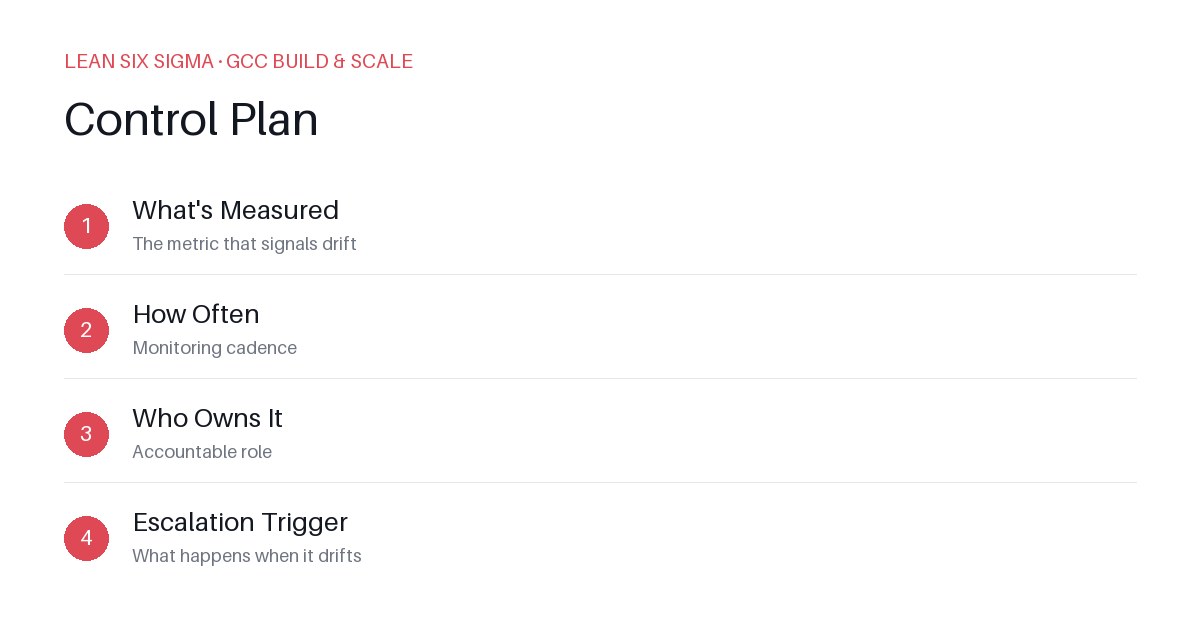
Downloadable templates
A practical guide to building control plans that stabilize GCC processes and reduce variation.
Why Control Plans Matter in GCCs
Global Capability Centers (GCCs) thrive on predictable outcomes. But without control plans, processes drift. Teams spend more time firefighting than delivering value. A control plan is a living document that locks in how work gets done, who owns it, and how you spot trouble before it becomes a crisis.
Think of it as the operating system for your GCC. Without it, you’re running on guesswork. With it, you can scale confidently.
Build the Right Control Plan
A control plan isn’t a one-page summary. It’s a structured framework that covers:
- Process Scope: Define what’s in and out. Example: “Order processing from receipt to confirmation,” not just “handling orders.”
- Roles and Responsibilities: Clarify who does what. Use RACI sparingly but precisely. Example: Analysts validate data; managers approve exceptions.
- Key Performance Indicators (KPIs): Pick metrics that matter. Track cycle time, error rate, and customer satisfaction. Avoid vanity metrics.
- Control Methods: Specify how you monitor and adjust. Use checklists, automated alerts, and regular audits. Example: Daily review of error rates with a threshold trigger for investigation.
- Continuous Improvement: Build in feedback loops. Schedule monthly reviews to update the plan based on data and team input.
Implement with Discipline
Writing the plan is easy. Making it stick is hard. Start small. Pick one high-impact process, like invoice processing, and build a control plan around it. Train the team thoroughly. Use visual management to display key steps and metrics. Lead by example—show that the plan is a tool, not a burden.
Monitor and Adapt
Control plans aren’t set-and-forget. They need regular updates. Track KPIs weekly. If error rates spike, investigate root causes and adjust controls. Celebrate wins. When the team sees results, adoption grows. If something isn’t working, tweak it. The goal is stability, not perfection.
Common Pitfalls to Avoid
- Overcomplication: Keep the plan simple. Too many steps lead to compliance fatigue.
- Ignoring Team Input: Your team knows the process best. Involve them in creating and refining the plan.
- Static Documents: Treat the control plan as a living artifact. Update it as processes evolve.
Next Steps
Start by mapping your current process. Identify gaps. Draft a control plan. Test it. Refine it. Scale it. Stability isn’t an accident—it’s engineered. And control plans are the blueprint.
Comments
Be the first to comment on this post.
Sign in to leave a comment.