Cutting GCC Onboarding Delays in Half: A DMAIC Playbook
September 26, 2026
Like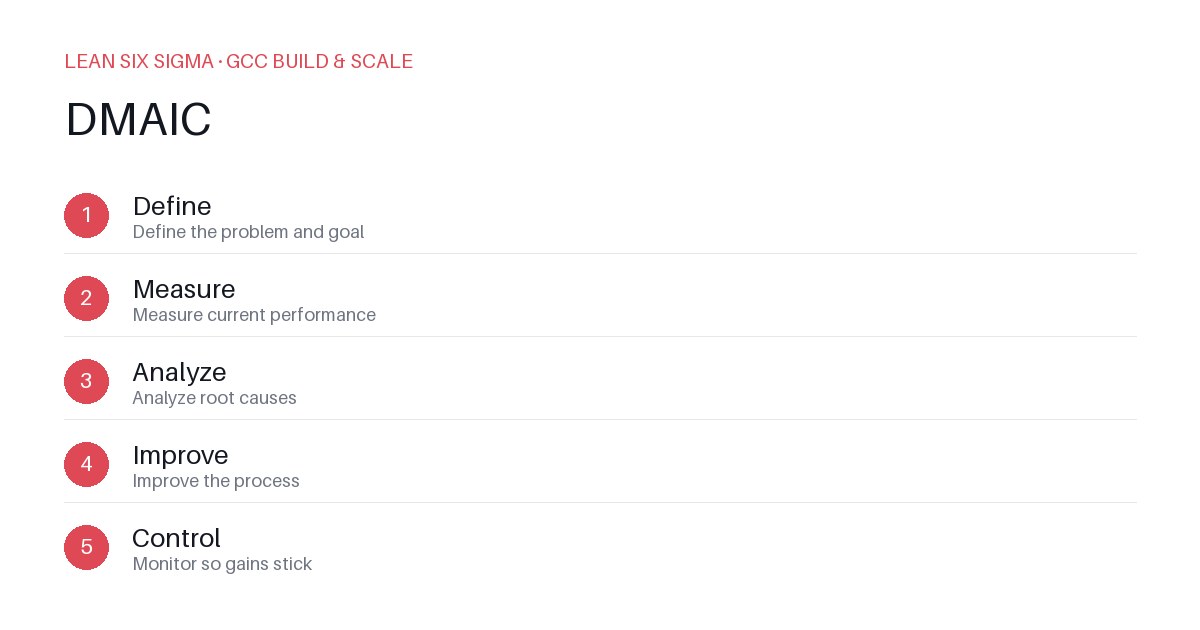
Downloadable templates
Map your onboarding bottlenecks with DMAIC to slash time-to-productivity and get new talent ramping faster.
Cutting GCC Onboarding Delays in Half: A DMAIC Playbook
Defining the Real Problem
Onboarding delays in Global Capability Centers (GCCs) rarely stem from a single broken process. They usually hide in handoff gaps between HR, IT, and domain leads. If you’re treating onboarding as an administrative checklist, you’re missing the operational friction that stalls ramp-up.
Start by measuring baseline metrics. Track time from offer acceptance to first billable hour. Segment delays by region, skill cluster, and dependency type. This data becomes your problem statement.
Quantifying the Cost of Delay
Every day a new hire sits idle is a day of lost productivity, delayed project contributions, and increased turnover risk. Consider a GCC with 50 new hires per quarter. If the average ramp-up delay is 10 days instead of the target 5, that’s 250 lost workdays per quarter. At an average fully loaded cost of $60/hour, this translates to over $150,000 in direct lost productivity annually per GCC.
Furthermore, delayed onboarding erodes morale. New hires who wait days for access to systems or training materials often feel undervalued, which can impact retention rates during the critical first 90 days.
Measuring the Current State
Map each onboarding stage and time it against actual execution. Use a value stream map to spot where work piles up. Common hotspots include:
- IT provisioning stuck in ITSM queues
- Training materials not localized or version-controlled
- Domain mentors unavailable due to production load
- Compliance approvals looping between legal and regional leads
Log each delay with root cause tags. This creates a clear picture of where you’re losing velocity.
Conducting a Cross-Functional Audit
To get a true picture, conduct a cross-functional audit involving HR, IT, and domain leads. Interview recent hires about their experience. Ask: “Where did you get stuck?” “What information was missing?” “Who did you have to chase down?”
Analyze ITSM ticket data for provisioning delays. Look at average resolution times and common reasons for delays. Review training completion rates and identify which modules cause the most drop-offs or re-attempts.
Improving the Process
Attack the highest-impact bottlenecks first. Standardize handoff protocols between teams. Implement SLAs with escalation paths for IT provisioning and compliance.
For training, shift to modular, self-paced content with embedded assessments. This reduces scheduling conflicts and lets learners progress at their own pace.
Assign dedicated onboarding champions per region. These owners coordinate dependencies and track progress against milestones.
Implementing Automated Provisioning
One of the most effective improvements is automating IT provisioning. Implement an automated workflow that triggers system access requests when a hire is approved in HR. Use role-based access control to ensure new hires get the right permissions without manual intervention. Set up automated notifications to ITSM when provisioning is delayed beyond the SLA.
Enhancing Training Delivery
Shift from static training materials to interactive, modular content. Use platforms that allow learners to complete training at their own pace. Embed quizzes and assessments to ensure knowledge retention. Provide access to recorded sessions for those who miss live training.
Empowering Onboarding Champions
Assign dedicated onboarding champions per region. These individuals are responsible for coordinating all aspects of onboarding for new hires in their region. They act as a single point of contact for new hires and their managers. They track progress against milestones and escalate issues when necessary.
Controlling and Sustaining Results
Automate tracking with dashboards that flag delays in real time. Review weekly with cross-functional leads to address emerging bottlenecks.
Tie onboarding performance to team KPIs. Recognize teams that consistently hit ramp-up targets.
Revisit the process quarterly. As GCCs scale, new bottlenecks emerge. Continuous improvement keeps onboarding lean and efficient.
Establishing Continuous Improvement Cycles
Set up a continuous improvement cycle. Review onboarding metrics monthly. Identify areas for improvement and implement changes. Track the impact of these changes on onboarding times and new hire satisfaction.
Recognize and reward teams that consistently hit ramp-up targets. This creates a culture of accountability and continuous improvement.
Revisit the process quarterly. As GCCs scale, new bottlenecks emerge. New systems, new regions, and new skill clusters can introduce new challenges. Regular reviews ensure that onboarding remains efficient and effective.
Comments
Be the first to comment on this post.
Sign in to leave a comment.