DMAIC Playbook: Fix GCC Onboarding Delays
October 31, 2026
Like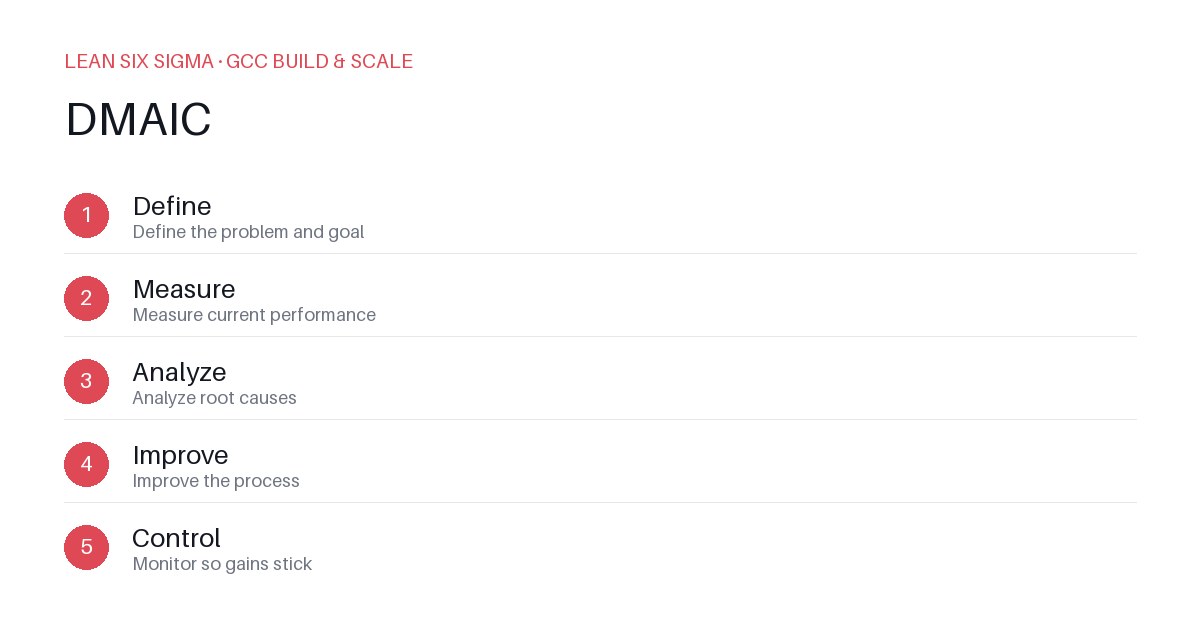
Downloadable templates
Cut GCC onboarding time by mapping the process, eliminating waste, and standardizing steps with a practical DMAIC approach.
Define: Pinpoint the Real Bottleneck
Onboarding delays at Global Capability Centers (GCCs) often masquerade as 'culture fit' or 'training load.' They're usually process gaps. Start by defining the problem with data, not anecdotes. Track the cycle time from hire date to first billable hour. Use a value stream map to identify where new hires stall. Common hotspots include IT provisioning, compliance training, and mentor pairing.
Measure: Quantify the Current State
Collect cycle time data for the last 50 hires. Calculate the overall process time, then break it down into sub-processes. Identify the largest contributors to delay. Example: If average onboarding takes 21 days, and IT setup takes 5 days, compliance takes 3 days, and manager handoff takes 1 day, you've found your targets. Document the current state with a process map. Note every handoff, approval, and waiting period.
Analyze: Root Cause the Delays
Use a 5-Why analysis on the biggest delays. For example, if IT provisioning takes 5 days, ask why. Is it a queue? A missing template? A lack of IT staff? You'll likely find systemic issues, not individual failures. Look for variation in the data. Some hires take 7 days, others 12. Why? Map the process against the variation to find the root causes. Common findings: redundant approvals, lack of standardized templates, or unclear ownership of onboarding tasks.
Improve: Design a Streamlined Process
Redesign the onboarding process based on your root causes. Eliminate non-value-added steps. Standardize templates for IT setup, compliance, and manager handoff. Implement a single point of contact for onboarding coordination. Create a digital checklist that tracks progress in real time. Example: Replace manual IT requests with an automated workflow that triggers when a hire is approved. Reduce compliance training from 3 days to 1 day by using micro-learning modules. Set clear SLAs for each step. For example, IT must provision accounts within 24 hours of hire date.
Control: Monitor and Sustain Gains
Implement control charts to track cycle time. Set a target, such as reducing onboarding to 10 days. Monitor weekly. If delays spike, investigate immediately. Use a root cause analysis for any exception. Train new hires on the standardized process. Conduct monthly reviews with stakeholders to ensure adherence. Celebrate wins to reinforce the new process. Remember, control is not about perfection; it's about continuous improvement. Revisit the process quarterly to identify new bottlenecks and refine further.
Comments
Be the first to comment on this post.
Sign in to leave a comment.