Kaizen Habits for Distributed GCC Teams
September 25, 2026
Like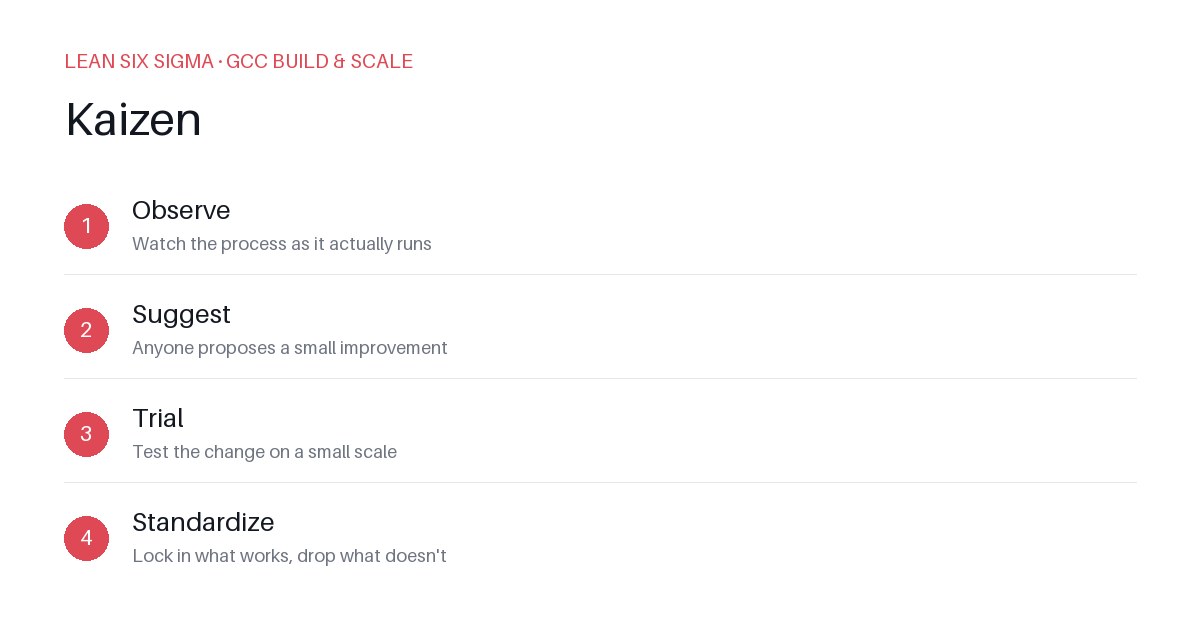
Downloadable templates
Distributed GCC teams need structured, repeatable micro-improvements to stay agile and reduce waste across time zones.
Start with a Shared Problem Statement
Distributed teams often drift into parallel workstreams without alignment. Before any process tweak, agree on one bottleneck. Use a simple RACI map to clarify who owns the problem, who can change it, and who decides. Example: if ticket resolution time is 48 hours, make that the target. Post the problem in your team’s central channel and pin it for 30 days. This keeps focus sharp and prevents “improvement fatigue.”
Run Daily 15-Minute Kaizen Huddles
Time zones break traditional standups. Instead, schedule a rotating 15-minute huddle where one person shares: what worked, what didn’t, and one small fix proposed. Rotate the facilitator weekly to distribute ownership. Keep notes in a shared doc tagged with “Kaizen.” Example: if a team member notices redundant approvals, they propose a one-click auto-approval for low-risk tasks. The group votes and tests the change within 48 hours.
Implement “Small Batch” Process Changes
Never overhaul a workflow overnight. Pick one step, change it, and measure. Example: reduce approval layers from three to two for routine requests. Track cycle time before and after for two weeks. If metrics improve, lock the change. If not, revert and adjust. Document every experiment in a “Kaizen Log” with dates, owners, and results. This builds a culture of safe, incremental improvement.
Use Visual Management Across Time Zones
Distributed teams struggle with visibility. Create a shared Kanban board with columns: Backlog, In Progress, Review, Done. Color-code by priority and time zone. Update status in real time. Example: if a task sits in “Review” for more than 24 hours, a bot flags it. This exposes bottlenecks instantly and prompts quick fixes without meetings.
Celebrate Micro-Wins Publicly
Kaizen thrives on recognition. End each huddle with a “Win of the Week” shoutout. Example: “Thanks to Priya for cutting approval time by 30%.” Post these in a dedicated channel. Small wins compound into big cultural shifts. When teams see impact, they repeat the behavior. No fluff—just real results, shared openly.
Comments
Be the first to comment on this post.
Sign in to leave a comment.