Kaizen Habits for Distributed GCC Teams
October 23, 2026
Like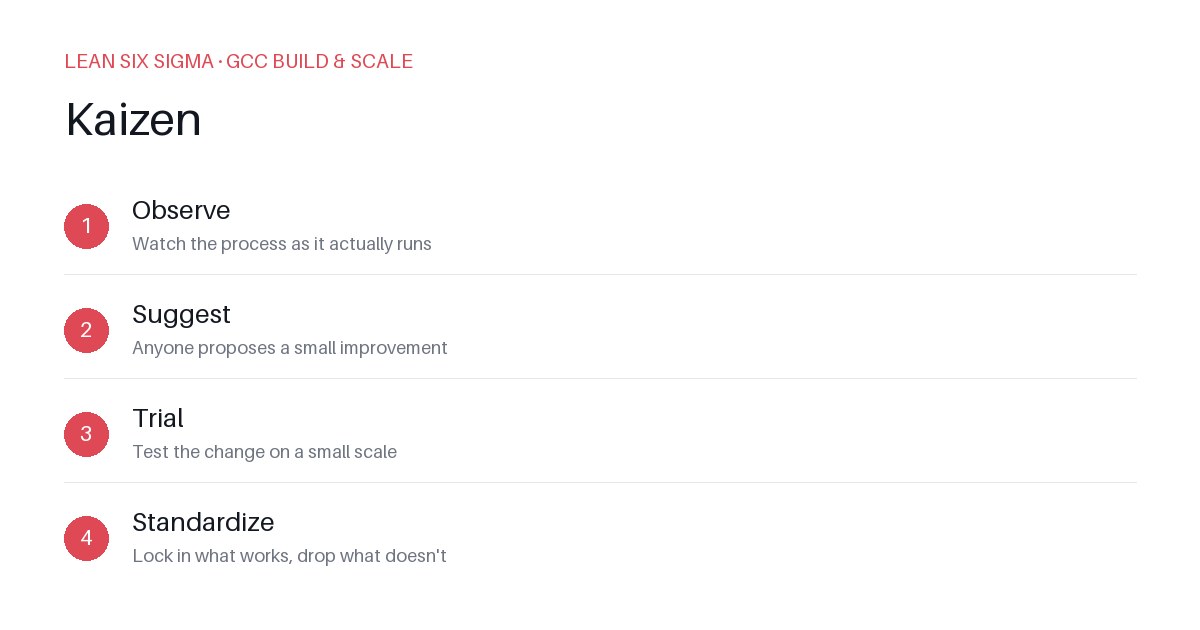
Downloadable templates
Implement five daily Kaizen habits to drive continuous improvement across distributed Global Capability Centers.
Start with a Daily Stand-Up Ritual
Distributed teams lose momentum without structure. Replace lengthy meetings with a 15-minute daily stand-up. Focus on three questions: What did I complete? What will I do today? What is blocking me? Use a shared digital board to track blockers in real-time. This keeps everyone aligned and surfaces issues before they become delays.
To maximize effectiveness, assign a rotating facilitator to keep the conversation on track and ensure every voice is heard. Encourage team members to update their status on the board before the call begins, so the meeting can focus on problem-solving rather than status reporting. If a blocker requires more than two minutes to resolve, schedule a separate follow-up session to avoid derailing the stand-up. This disciplined approach ensures that communication remains concise, actionable, and inclusive across time zones.
Track Metrics That Matter
Avoid vanity metrics. Focus on cycle time, defect rate, and throughput. Use a simple dashboard visible to all team members. Review these metrics weekly to identify trends and areas for improvement. Data-driven decisions lead to faster problem resolution and higher quality outputs.
Cycle time measures how long it takes for a task to move from start to finish, helping teams identify bottlenecks in their workflow. Defect rate tracks the frequency of errors introduced during development, offering insight into code quality and testing effectiveness. Throughput reflects the number of tasks completed per unit of time, providing a clear picture of team productivity. By visualizing these metrics on a shared dashboard, team members can spot patterns and make informed adjustments. For example, if cycle time spikes consistently during certain phases, it may indicate a need for additional resources or process refinement. Regular metric reviews also foster accountability and encourage a culture of continuous improvement.
Encourage Cross-Functional Collaboration
Break down silos by pairing team members from different functions on projects. This fosters shared understanding and reduces hand-off errors. Set up regular cross-functional workshops to discuss challenges and brainstorm solutions. Collaboration accelerates innovation and ensures diverse perspectives shape outcomes.
To implement this effectively, create cross-functional squads for specific initiatives, ensuring each squad includes members from development, design, QA, and operations. Schedule bi-weekly collaboration sessions where teams share progress, discuss obstacles, and co-create solutions. Encourage informal interactions through virtual coffee chats or themed hackathons, which help build rapport and trust across departments. When team members from different disciplines work together, they gain empathy for each other’s challenges, leading to more cohesive and user-centric products. This approach not only improves communication but also cultivates a sense of shared ownership and responsibility.
Implement a Feedback Loop
Create a systematic way to gather and act on feedback. Use retrospectives after each project phase to discuss what worked and what didn’t. Document insights in a shared knowledge base. Encourage team members to suggest improvements without fear of criticism. This culture of openness drives continuous learning and adaptation.
Retrospectives should be structured to ensure constructive dialogue. Start by reviewing the project’s goals and outcomes, then move into discussing successes and areas for improvement. Use techniques like “Start, Stop, Continue” to categorize feedback and make it actionable. Assign owners to each identified improvement and set deadlines for implementation. Follow up in subsequent retrospectives to assess progress. Additionally, create anonymous feedback channels for team members who may hesitate to share openly. Regularly review and update the knowledge base to ensure insights are accessible and relevant. This systematic approach transforms feedback into a powerful tool for growth and innovation.
Celebrate Small Wins
Recognition fuels motivation. Acknowledge achievements, no matter how minor. Publicly celebrate milestones and individual contributions. Use team channels to share success stories. Positive reinforcement builds morale and encourages a proactive approach to problem-solving. Small wins accumulate into significant progress over time.
To institutionalize this practice, designate a “Wins Wall” in your team’s communication platform where members can post accomplishments. Encourage peers to comment and congratulate each other, fostering a supportive environment. Schedule monthly recognition meetings to highlight standout contributions and discuss how they align with team goals. Personalize recognition by acknowledging specific actions and their impact, rather than generic praise. When team members feel valued, they are more likely to go above and beyond and engage in collaborative problem-solving. Celebrating small wins also reinforces a growth mindset, reminding everyone that progress is built through consistent effort and incremental success.
Review and Adapt Processes
Regularly evaluate workflows for inefficiencies. Ask the team: What steps add no value? Where do delays occur? Simplify processes by eliminating unnecessary steps. Pilot changes in small groups before scaling. Continuous refinement ensures processes stay relevant and effective as projects evolve.
To facilitate this, conduct quarterly process audits where team members map out current workflows and identify friction points. Use tools like flowcharts or swimlane diagrams to visualize the process and pinpoint areas for improvement. Involve the entire team in the review to gather diverse perspectives and ensure buy-in for changes. When testing new processes, start with a pilot group to gather feedback and measure impact before rolling out changes organization-wide. Document lessons learned and update standard operating procedures accordingly. By embracing agility and continuous improvement, teams can maintain efficiency and adaptability in a rapidly changing environment.
Comments
Be the first to comment on this post.
Sign in to leave a comment.