RACI Matrices for GCC Cross-Site Ownership
October 19, 2026
Like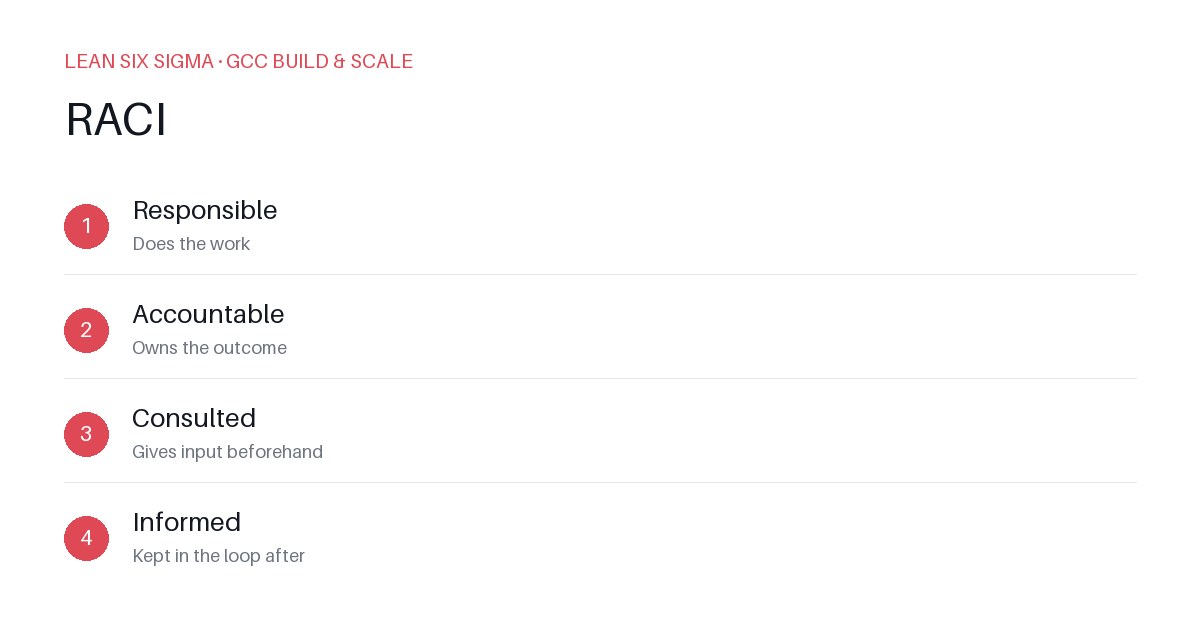
Downloadable templates
Eliminate handoff failures in Global Capability Centers by defining clear RACI boundaries across distributed teams.
The Problem of Shadow Ownership
GCCs often span three or more time zones. Without explicit ownership, work slips through the cracks. A defect in the London site might be fixed, but the US team never updates their documentation. The result is duplicated effort and broken SLAs.
RACI matrices are not just a compliance exercise. They are a mechanism to enforce accountability across borders.
Defining Roles for Cross-Site Teams
Start by mapping the standard roles to your GCC structure:
- Responsible: The person who does the work. In a GCC, this is usually the local team lead or specialist.
- Accountable: The single person who signs off. This must be the GCC Director or the Process Owner, not the site manager.
- Consulted: The people whose input is needed before the Responsible party acts. This includes subject matter experts in other regions.
- Informed: The people who need updates after the action. This includes finance and HR stakeholders.
Building the Matrix
Use a simple spreadsheet or project management tool. Avoid digital tools that allow multiple people to edit simultaneously, as this creates confusion.
- List Activities: Break down the GCC lifecycle into small, actionable steps. Do not use "Manage GCC". Use "Review hire data" or "Update training curriculum".
- Assign Roles: For each activity, assign one R, one A, one or more Cs, and one or more Is.
- Validate with Sites: Send the draft to the site leads. Ask them to confirm their roles. If a site lead disagrees, negotiate. Do not let the matrix sit in a vacuum.
Handling Conflicts
Conflicts arise when two people claim the A role or when the Responsible party is unclear. Here is how to resolve them:
- Two Accounts: This is a red flag. It means the process is broken. Designate one person as the Accountable party. The other person can be Consulted or Informed.
- No Responsible: This means no one will do the work. Assign a responsible person immediately. If the work is not critical, remove the activity from the matrix.
- Too Many Consulted: If you have more than three Cs, you are slowing down the process. Reduce the number of consultants. Use an Informed role for the rest.
Maintaining the Matrix
A RACI matrix is not a one-time activity. It must be reviewed quarterly. As the GCC scales, roles change. New processes are added. The matrix must reflect the current reality, not the past.
Assign a process owner to review the matrix. Make it part of the monthly GCC health check. If the matrix is outdated, the GCC is operating in the dark.
Final Tips
- Keep it Simple: Do not create a RACI for every minor task. Focus on high-impact activities.
- Communicate Clearly: Share the matrix with all stakeholders. Make sure everyone knows their role.
- Enforce Accountability: If a task is not completed, check the RACI. Who was Responsible? Who was Accountable? Use the matrix to drive accountability, not blame.
Comments
Be the first to comment on this post.
Sign in to leave a comment.