PDCA Loops for GCC Vendor Governance
September 15, 2026
Like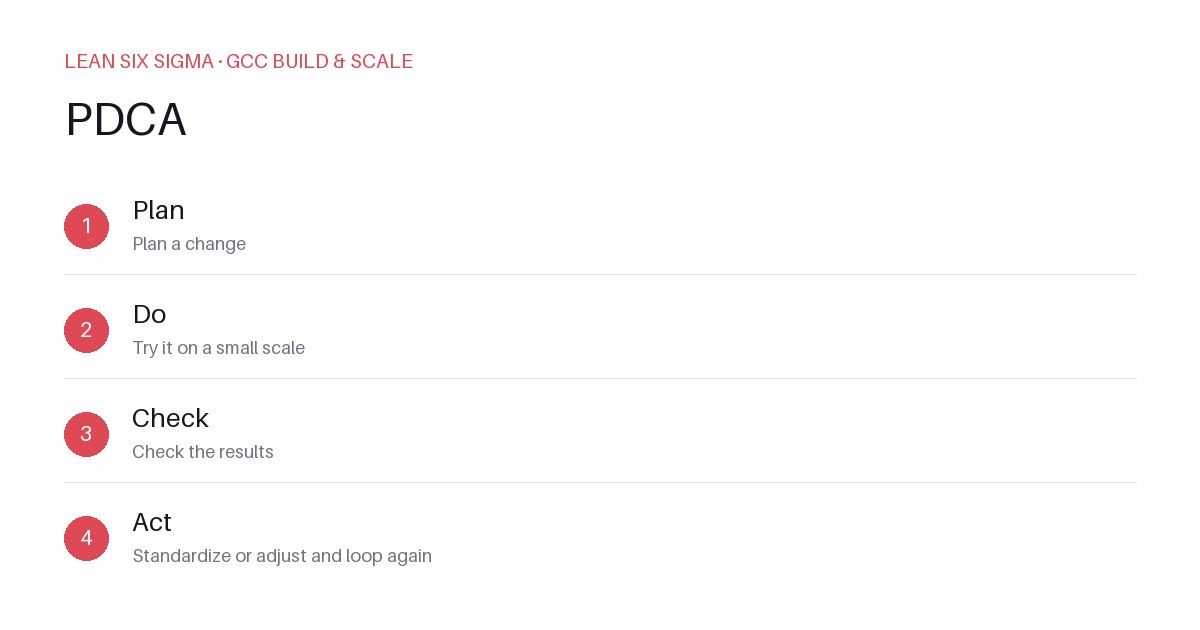
Downloadable templates
Tighten vendor governance with PDCA loops to cut waste, improve quality, and align external partners to your GCC goals.
Start with a Clear Plan
GCCs rely heavily on vendors for scale. Without governance, you get misaligned priorities, scope creep, and inflated costs. Begin by defining what success looks like for each vendor relationship. Map their deliverables to your capability objectives and set measurable targets.
Define the Plan phase concretely:
- Objective: Reduce defect rates in vendor-delivered work by 20% in 90 days.
- Scope: Focus on QA testing and automation scripts.
- Metrics: Defect escape rate, cycle time, cost per defect.
- Owner: Assign a single GCC process owner.
- Timeline: 90-day sprint with weekly check-ins.
This clarity prevents drift and keeps the vendor accountable to your goals.
Execute and Collect Data
Launch the plan with a pilot. Run a small batch of vendor work against your new standards. Track every metric you defined. Use a simple dashboard or shared spreadsheet to capture real-time data.
Key execution steps:
- Daily stand-ups: 15-minute syncs with vendor team leads.
- Weekly reviews: Analyze defect rates and cycle time trends.
- Data logging: Record defects by type, root cause, and impact.
- Feedback loop: Share findings with the vendor team immediately.
Real scenario: A GCC partnered with a vendor for test automation. The initial defect escape rate was 12%. After implementing stricter code review gates and automated regression suites, they tracked a drop to 5% within 45 days.
Check for Gaps
At the end of the pilot, review the data. Did you hit your target? Where did things break? Common gaps include:
- Misaligned incentives: Vendor KPIs don’t match GCC outcomes.
- Tooling limitations: Inadequate CI/CD pipelines cause bottlenecks.
- Communication delays: Feedback loops take too long.
Identify the root causes, not just symptoms. Use 5 Whys or a fishbone diagram to dig deeper. For example, if defect rates remain high, ask: Is it a training issue? A tooling gap? A process mismatch?
Adjust and Iterate
Close the loop by updating your vendor governance framework. Adjust KPIs, retrain teams, or upgrade tools. Then restart the cycle with a refined plan.
Actionable adjustments:
- Revise SLAs: Include defect rate targets and penalty clauses.
- Enhance training: Provide vendor teams with GCC-specific process training.
- Automate monitoring: Use dashboards to flag deviations early.
- Scale the pilot: Roll out successful changes to all vendor teams.
Repeat this PDCA cycle quarterly. Each loop tightens your vendor governance, reduces waste, and improves quality. Over time, you build a resilient GCC ecosystem where vendors operate as true extensions of your team.
Remember: Governance isn’t a one-time setup. It’s a continuous improvement engine. Run PDCA loops, act on data, and keep your GCC moving forward.
Comments
Be the first to comment on this post.
Sign in to leave a comment.