PDCA for GCC Vendor Governance: Continuous Improvement
August 28, 2026
Like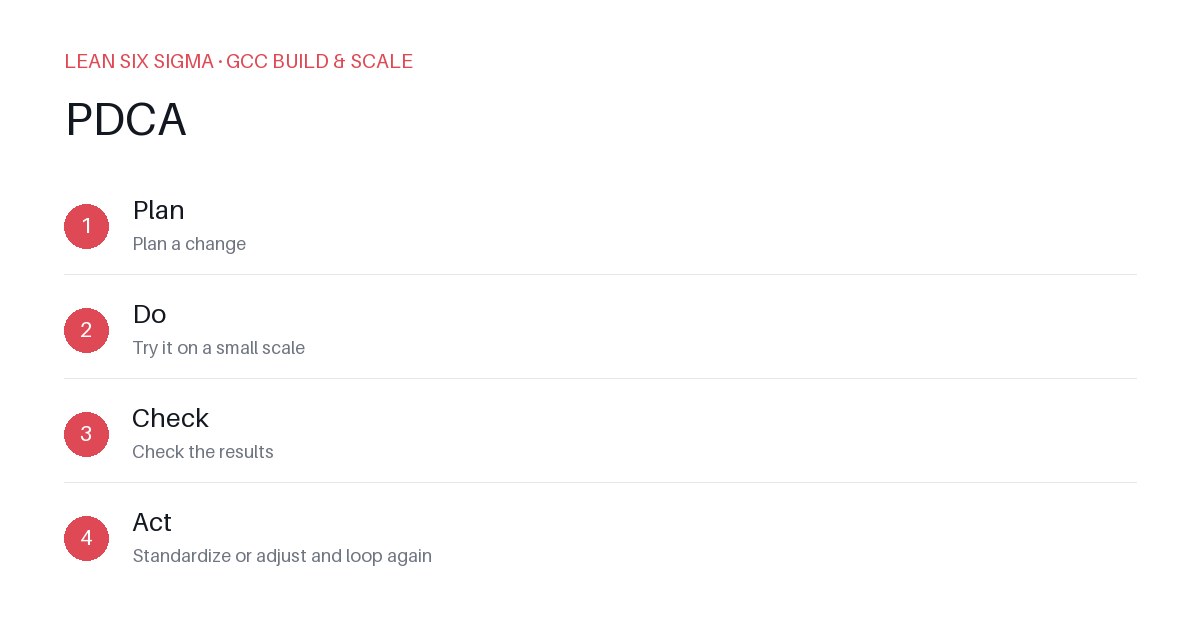
Downloadable templates
Apply PDCA to vendor governance to reduce waste, improve quality, and maintain control over your global capability center supply chain.
The Problem with Static Vendor Contracts
Most GCCs treat vendor governance as a compliance checkbox. You sign the contract, you audit quarterly, you hope for the best. This approach fails in dynamic environments where delivery speed and quality matter more than paperwork.
PDCA (Plan-Do-Check-Act) turns vendor governance from a static process into a continuous improvement engine. It keeps you aligned with your GCC's strategic goals while reducing operational waste.
Plan: Define Vendor Performance Metrics
Start by identifying the specific metrics that matter to your GCC. Generic KPIs like "satisfaction scores" don't cut it. You need measurable outcomes tied to business value.
Concrete steps:
- Map each vendor to a specific GCC capability (e.g., UI testing, data engineering, cloud infrastructure).
- Define 2-3 critical metrics per vendor, such as defect escape rate, cycle time, or cost per unit.
- Set clear thresholds for what constitutes acceptable performance.
Example: A UI testing vendor might be measured on test coverage accuracy and time-to-defect-resolution. If these metrics slip, you know exactly where to intervene.
Do: Implement and Monitor
Roll out the metrics and begin tracking. Use automated tools where possible to reduce manual effort and increase data accuracy.
Key actions:
- Integrate performance data into your existing vendor management platform.
- Schedule regular check-ins focused on metric trends, not just status updates.
- Document any deviations from expected performance immediately.
Avoid overcomplicating this phase. Start with a pilot group of vendors to test the approach and refine your metrics before scaling.
Check: Analyze Results
Review the data against your defined thresholds. Look for patterns, not just outliers. Are certain vendors consistently underperforming? Are there systemic issues in how work is handed off?
Questions to ask:
- Which metrics are most critical to GCC success?
- Are vendors aware of performance gaps?
- What root causes are driving deviations?
Use tools like fishbone diagrams or 5 Whys to dig deeper into performance issues. This step is where you separate symptoms from root causes.
Act: Improve and Standardize
Based on your analysis, make changes. This could mean renegotiating contracts, providing additional training, or even replacing underperforming vendors.
Steps to take:
- Share performance data with vendors and co-create improvement plans.
- Adjust metrics if they're not driving the right behaviors.
- Document lessons learned and update your governance framework.
Repeat the PDCA cycle. Governance isn't a one-time event; it's an ongoing discipline that keeps your GCC agile and efficient.
Why This Works
PDCA loops create accountability and clarity. Vendors know exactly what's expected, and you have the data to make informed decisions. Over time, this reduces waste, improves quality, and strengthens your GCC's competitive advantage.
Start small. Pick one vendor, define clear metrics, and run a PDCA cycle. Then scale the approach across your entire supply chain.
Comments
Be the first to comment on this post.
Sign in to leave a comment.