Using DMAIC to Fix GCC Onboarding Delays
September 10, 2026
Like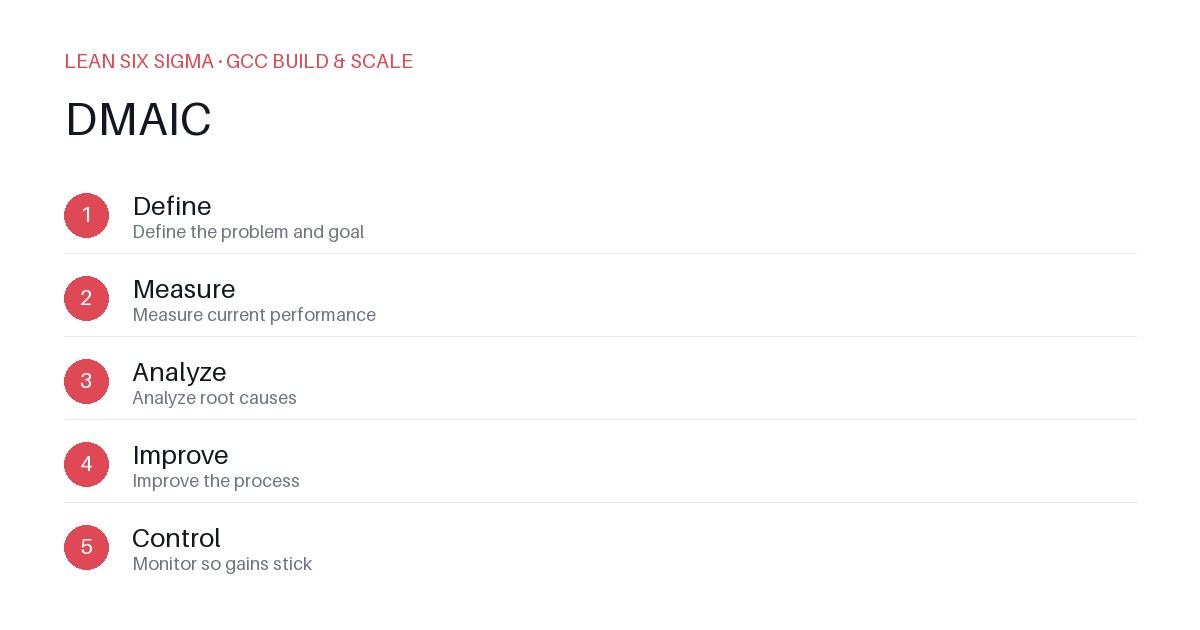
Downloadable templates
A practical walkthrough of applying DMAIC to real GCC build-and-scale work.
Using DMAIC to Fix GCC Onboarding Delays
Why DMAIC Matters for GCC Teams
Scaling a Global Capability Center means standardizing work across sites, handoffs, and teams that have never worked together before. When onboarding delays pile up, it’s not just a scheduling issue — it’s a systemic bottleneck that erodes morale, delays value delivery, and creates inconsistent experiences for new hires. DMAIC gives you a shared vocabulary and a repeatable sequence for diagnosing and fixing those delays without relying on guesswork or tribal knowledge.
By applying a structured problem-solving framework, GCC teams can move from reactive firefighting to proactive process design. DMAIC doesn’t just identify where delays happen — it helps you understand why they persist, what’s truly driving them, and how to implement changes that stick.
The DMAIC Sequence
- Define — Define the problem and goal
- Measure — Measure current performance
- Analyze — Analyze root causes
- Improve — Improve the process
- Control — Monitor so gains stick
Applying It
Start small: pick one recurring pain point your GCC team hits every week, and walk it through these 5 steps before rolling the approach out more broadly. Download the template below to run your first pass.
Deep Dive: Each Phase in Action
Define: Pinpoint the Exact Problem
Instead of saying “onboarding is slow,” define it precisely. Example: “New analysts take 14 days from offer acceptance to first billable task, exceeding the 10-day target and causing 30% of new hires to request extensions during their first month.”
Clear definition includes:
- Who is affected (e.g., new analysts, data engineers)
- What the current state is (e.g., 14-day average)
- What the desired state is (e.g., ≤10 days)
- Why it matters (e.g., impacts client readiness, increases early attrition risk)
Avoid vague statements. Use metrics, timeframes, and specific roles to ground the problem.
Measure: Gather Baseline Data
You can’t improve what you don’t measure. Collect historical onboarding timelines from HRIS, project management tools, and stakeholder surveys. Break down the 14-day average into components:
- Days waiting for IT setup
- Days waiting for access approvals
- Days in orientation training
- Days before first task assignment
Identify variability: Do some sites consistently take longer? Are certain roles delayed more than others? Quantify the cost of delay — lost productivity, client dissatisfaction, or increased support load.
Analyze: Uncover Root Causes
Use tools like the 5 Whys, fishbone diagrams, or value stream mapping to dig beneath symptoms. Common root causes in GCC onboarding include:
- Manual access requests creating approval bottlenecks
- Lack of standardized onboarding checklists per role
- Overloaded IT support teams during peak hiring periods
- Misaligned expectations between HR, IT, and delivery managers
Distinguish between symptoms (e.g., “new hires wait for laptops”) and root causes (e.g., “no pre-provisioning workflow”).
Improve: Design and Implement Solutions
Based on your analysis, prioritize quick wins and systemic fixes. Examples:
- Automate access provisioning via integration between HRIS and IT service desk
- Create role-specific onboarding playbooks with clear SLAs
- Assign onboarding buddies from each site to guide new hires
- Implement a weekly onboarding dashboard to track progress and flag delays early
Pilot changes with one team or region before scaling.
Control: Embed and Sustain
Gains disappear without monitoring. Establish:
- A monthly onboarding review meeting with cross-functional owners
- KPIs tied to the original definition (e.g., average onboarding time, % on-time completion)
- Feedback loops from new hires and managers to catch drift early
- Process ownership assigned to a dedicated GCC process owner
Document the updated standard operating procedure and train all stakeholders.
Next Steps
DMAIC isn’t a one-time project — it’s a mindset for continuous improvement. Use this framework to turn onboarding delays from a recurring pain point into a competitive advantage for your GCC. Start with one process, measure rigorously, and scale what works.
Comments
Be the first to comment on this post.
Sign in to leave a comment.