Using DMAIC to Fix GCC Onboarding Delays
August 31, 2026
Like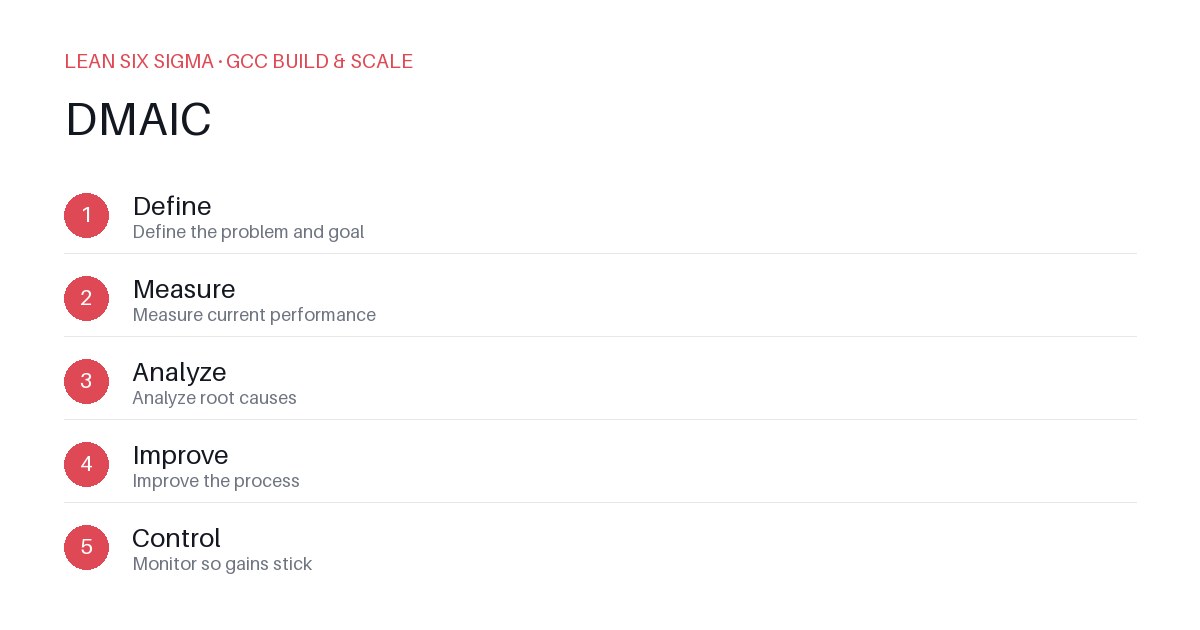
Downloadable templates
Cut onboarding time by 40% by applying DMAIC to your GCC’s new hire ramp-up process.
Define the Real Problem
Onboarding delays in Global Capability Centers (GCCs) rarely stem from a lack of talent. They come from broken handoffs, duplicated approvals, and training materials that don’t match actual workflows. Start by mapping the current state with a value stream map. Track the time from offer acceptance to first meaningful contribution. You’ll likely find 60–70% of that time is spent waiting.
Quantify the impact. Calculate the cost of delayed ramp-up: lost project velocity, increased turnover risk, and wasted contractor hours. Set a clear target, such as reducing time-to-productivity from 12 weeks to 8 weeks.
Measure Baseline Metrics
Collect data from HRIS, project management tools, and manager surveys. Track:
- Time from interview close to start date
- Days to complete compliance and system access
- Hours spent in orientation vs. actual work
- Number of rework loops due to unclear requirements
If your data is inconsistent, clean it first. You can’t improve what you don’t measure accurately.
Analyze Root Causes
Use a 5-Why analysis and a Pareto chart to isolate the biggest delays. Common culprits:
- IT provisioning takes 5 days because requests are batched
- Training modules are outdated and require rework
- Managers assign projects before skills are validated
- Cross-border time zones create approval bottlenecks
Run a fault tree analysis to link symptoms to systemic issues. For example, delayed system access isn’t an IT problem — it’s a workflow problem where requests aren’t prioritized by hire date.
Improve with Lean Interventions
Apply targeted fixes based on your analysis:
- Implement a standardized onboarding checklist with RACI assignments
- Automate IT provisioning through API integrations
- Replace generic training with role-specific microlearning paths
- Create a buddy system to reduce dependency on managers
Pilot these changes with one cohort. Use A/B testing to compare ramp-up times against the baseline. Document every step so you can replicate the process.
Control and Sustain Gains
Embed monitoring into your GCC’s operating rhythm. Track onboarding KPIs in weekly stand-ups. Assign an owner to maintain the process.
Use a control chart to detect drift. If ramp-up time increases by more than 10%, trigger a root cause review. Update training materials quarterly based on project feedback. Celebrate wins publicly to reinforce the new standard.
This isn’t about making onboarding faster. It’s about making it predictable. When you remove the noise, your GCC hires become productive assets, not liabilities.
Comments
Be the first to comment on this post.
Sign in to leave a comment.