Kaizen Habits for Distributed GCC Teams
September 3, 2026
Like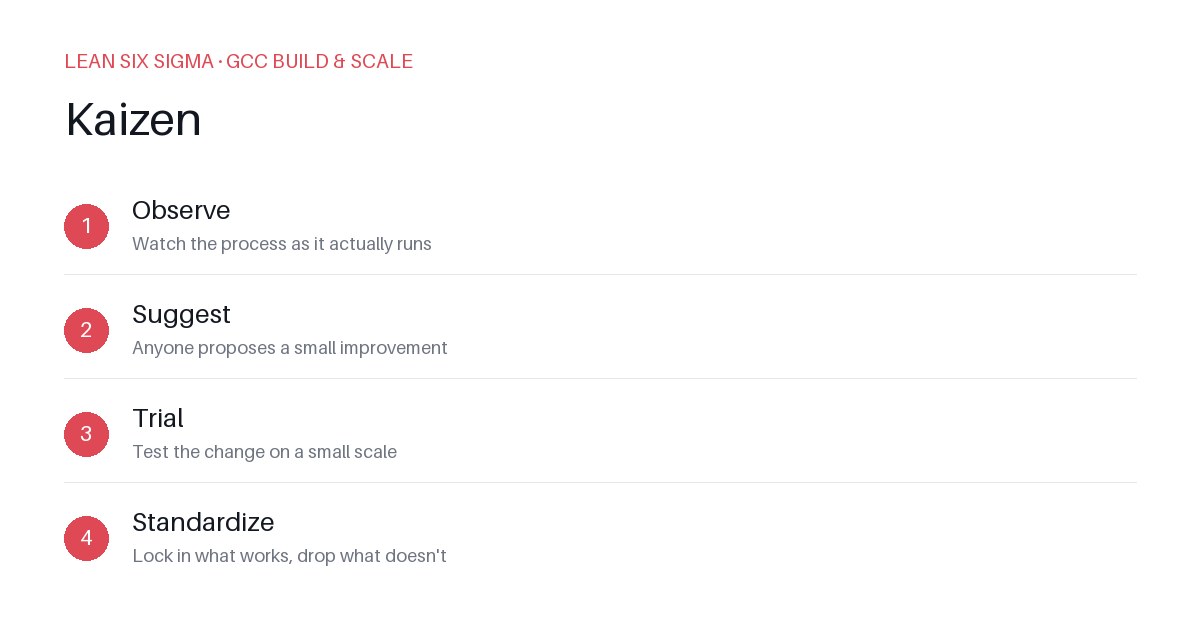
Downloadable templates
Implement daily micro-improvements across global GCC teams to cut waste and boost delivery speed without adding overhead.
Start with a 10-Minute Daily Standup That Actually Works
Distributed GCC teams often drown in status meetings. Replace them with a focused 10-minute daily huddle. Each member shares three things: what they completed, what they’re working on next, and any blockage. Keep it strict—no problem-solving in the huddle. If an issue needs resolution, schedule a separate 30-minute deep-dive. This habit keeps momentum and surfaces waste before it compounds.
Track Cycle Time, Not Just Output
Many GCCs measure success by volume of cases handled or lines of code written. Shift to cycle time: the actual duration from request intake to resolution. Use a simple Kanban board with columns for Incoming, In Progress, Review, and Done. Color-code tickets by priority. Review cycle time weekly. If a process step consistently delays work, that’s your waste to eliminate. For example, if review takes 48 hours, automate approvals or reduce the review queue.
Run Weekly Waste Hunts
Assign a rotating “Waste Hunter” role each week. This person’s only job is to identify one process step that adds no value. Examples include redundant approvals, manual data entry, or waiting for approvals from out-of-region teams. Document the waste, quantify its impact (time lost, cost), and propose a fix. Test the fix for two weeks. If it works, standardize it. If not, discard it. This turns continuous improvement into a team sport, not a management mandate.
Standardize with Visual Work Instructions
Distributed teams struggle with inconsistent execution. Create visual work instructions for repetitive tasks—like incident triage or compliance checks. Use simple diagrams or flowcharts, not lengthy manuals. Post these in shared drives and reference them during training. Update them quarterly based on Waste Hunt findings. Visuals reduce ambiguity and speed up onboarding for new GCC members.
Celebrate Small Wins Publicly
tKaizen fails when teams don’t see progress. Share improvements in a weekly newsletter or Slack channel. Highlight who spotted the waste, what changed, and the measurable result. Example: “Team reduced ticket resolution time by 15% by automating status updates.” Recognition reinforces the habit of looking for improvements, even in routine work. Keep it specific—avoid vague praise.
Measure, Adjust, Repeat
Kaizen isn’t a one-time project. Set a baseline for cycle time, error rate, or team satisfaction. Review metrics every two weeks. If a habit isn’t working, tweak it. If a process improvement breaks something else, roll it back. The goal isn’t perfection—it’s relentless, small steps toward a leaner GCC. Start with one habit, master it, then add another. Consistency beats intensity every time.
Comments
Be the first to comment on this post.
Sign in to leave a comment.