PDCA Loops for GCC Vendor Governance
October 14, 2026
Like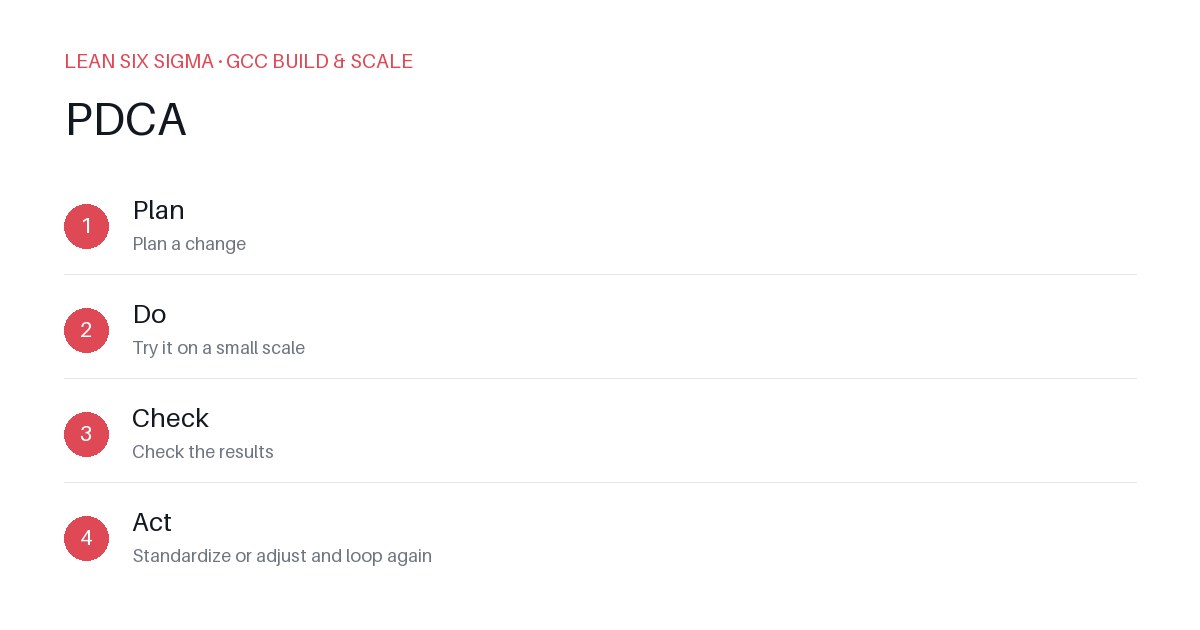
Downloadable templates
Run PDCA loops on your GCC vendors to cut waste, improve quality, and keep costs predictable.
Start with a Clear Plan
GCC vendor governance fails when it’s a checkbox exercise. Start by defining what you want to measure. Pick one process per vendor—code delivery, incident response, or test coverage. Write a one-page plan that states the current state, the target, and the success criteria. Example: reduce production defects from 12% to 5% in 90 days.
Run the Experiment
Don’t wait for a perfect solution. Pick a small change and test it. If your vendor’s sprint backlog is causing delays, try a two-week cap on new work. Track the impact on cycle time and defect rate. Keep the experiment small enough to fail safely. If the change doesn’t move the needle, stop and adjust.
Check the Data
Review the results against your plan. Use the same metrics you set at the start. If defects dropped to 7%, you’re on track but not there yet. If they rose to 15%, you have a problem. Document what worked and what didn’t. Avoid opinion-based reviews—stick to the numbers.
Adjust and Repeat
Take the lessons and apply them. If the two-week cap helped, make it permanent. If it hurt, revert and try a different change. Run the loop again. Governance isn’t a one-time setup. It’s a continuous adjustment based on real data.
Apply to Common GCC Vendor Issues
- Slow delivery: Test a new review process. Measure cycle time. Adjust the review steps.
- High defect rate: Introduce automated checks. Track defect escape rate. Refine the test suite.
- Poor communication: Set weekly syncs with clear agendas. Measure response time. Tweak the format.
Keep the Loop Tight
Run PDCA cycles every two weeks. Short cycles mean faster feedback. Long cycles mean stale data. Keep the team aligned on the same metrics. Celebrate small wins to keep momentum. Governance works when it’s a habit, not a project.
Avoid Common Traps
- Too many metrics: Focus on one or two per vendor. More metrics dilute focus.
- Ignoring root causes: Use the data to find why issues happen. Fix the cause, not just the symptom.
- Skipping the plan: Without a clear target, you can’t measure success. Always define what good looks like.
Final Note
PDCA loops turn vendor governance into a living system. You’ll catch issues early, improve quality, and keep costs in check. Start small, measure often, and adjust fast. The goal isn’t perfection—it’s continuous improvement.
Comments
Be the first to comment on this post.
Sign in to leave a comment.