Using DMAIC to Fix GCC Onboarding Delays
September 18, 2026
Like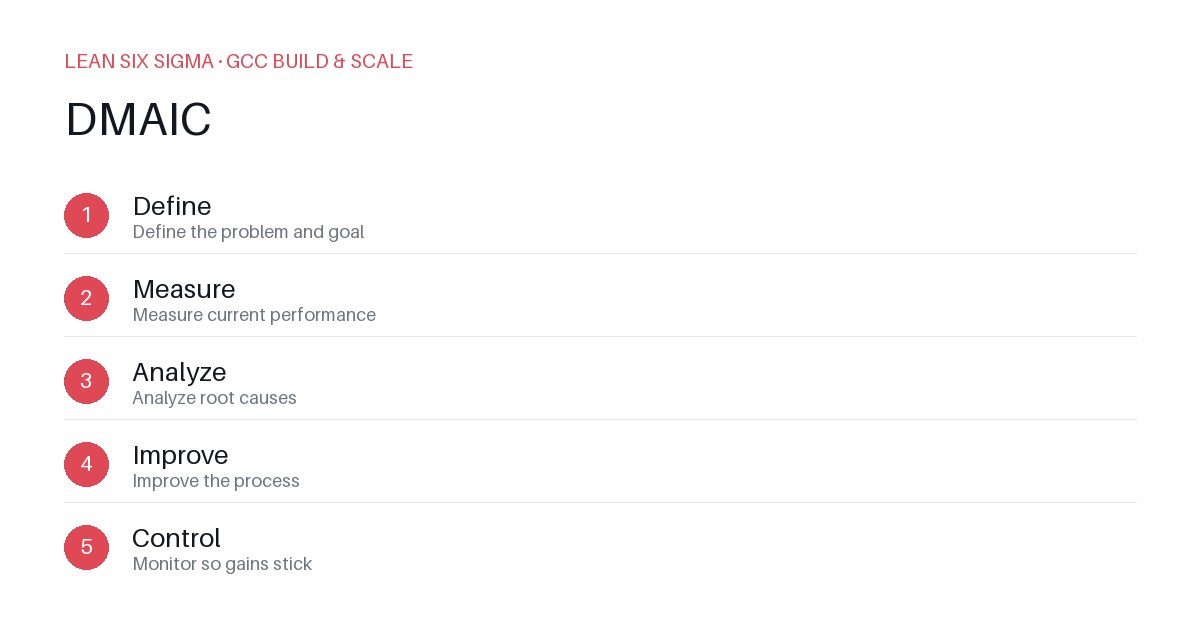
Downloadable templates
Cut new hire ramp time by 40% with a lean DMAIC process that eliminates handoff bottlenecks and standardizes training.
Define the Real Problem
Onboarding delays in Global Capability Centers (GCCs) rarely stem from a lack of talent. They stem from fragmented handoffs, unclear role expectations, and training materials that lag behind current business needs. Before you fix anything, you must isolate the exact bottleneck.
Map the current state end-to-end: from offer acceptance to first day, then to first independent task. Track cycle time for each step. You will likely find that 60-70% of the delay happens between the hiring team finishing their work and the GCC operational team starting onboarding.
Set a specific target. For example, reduce time-to-productivity from 14 days to 10 days. This gives your DMAIC project a measurable finish line.
Measure Baseline Metrics
You cannot improve what you do not measure. Gather data from the last 20 hires.
- Cycle Time per Stage: How many days does each step take?
- Rework Rate: How many hires require retraining or role adjustments?
- Bottleneck Frequency: Which step consistently causes delays?
If you do not have this data, start collecting it today. Use a simple spreadsheet. Track start and end times for each phase. This baseline is your 'before' number. It is the only way to prove that your changes actually work.
Analyze Root Causes
Look at your data and ask 'why?' until you find the root cause. Common culprits include:
- Tool Mismatch: HR uses one system, GCC uses another. Data does not sync automatically.
- Unclear Expectations: New hires do not know what 'day one' success looks like.
- Manual Handoffs: Someone has to email details between teams instead of using an automated workflow.
- Training Lag: Materials are outdated or not role-specific.
Use a Fishbone diagram to categorize these causes. Focus on the ones that impact the most hires and cause the most time loss. Do not try to fix everything at once. Pick the top two issues that drive the most delay.
Improve the Process
Now you design the solution. Build a standard operating procedure (SOP) that eliminates the root causes you identified.
- Automate Handoffs: Create a single workflow that triggers when a hire is accepted. This workflow sends a checklist to the GCC manager and IT.
- Role-Specific Playbooks: Replace generic training with role-specific guides. Each guide includes a 30-60-90 day plan with clear deliverables.
- Buddy System: Assign a peer buddy for the first two weeks. This reduces the load on managers and accelerates learning.
- Pre-Boarding Kit: Send a digital kit before day one. Include login credentials, team intro videos, and a first-week agenda.
Test your new process with a small group. Gather feedback and adjust. Do not roll it out to everyone until you have confirmed it works.
Control and Sustain
A process is only as good as its consistency. Monitor your new onboarding metrics weekly.
- Track Cycle Time: Ensure it stays at or below your target.
- Conduct Monthly Audits: Check that everyone follows the new SOP.
- Gather Feedback: Ask new hires what went well and what did not.
- Update Materials: Review and update training playbooks quarterly.
Assign an owner for the onboarding process. This person is responsible for keeping the system running smoothly. They must have the authority to make small adjustments as needed. Without clear ownership, the process will degrade back to chaos. Remember, DMAIC is not a one-time project. It is a continuous improvement cycle. Keep measuring, keep improving, and keep your GCCs moving fast.
Comments
Be the first to comment on this post.
Sign in to leave a comment.