5S for GCC Workspace and Digital Hygiene
August 18, 2026
Like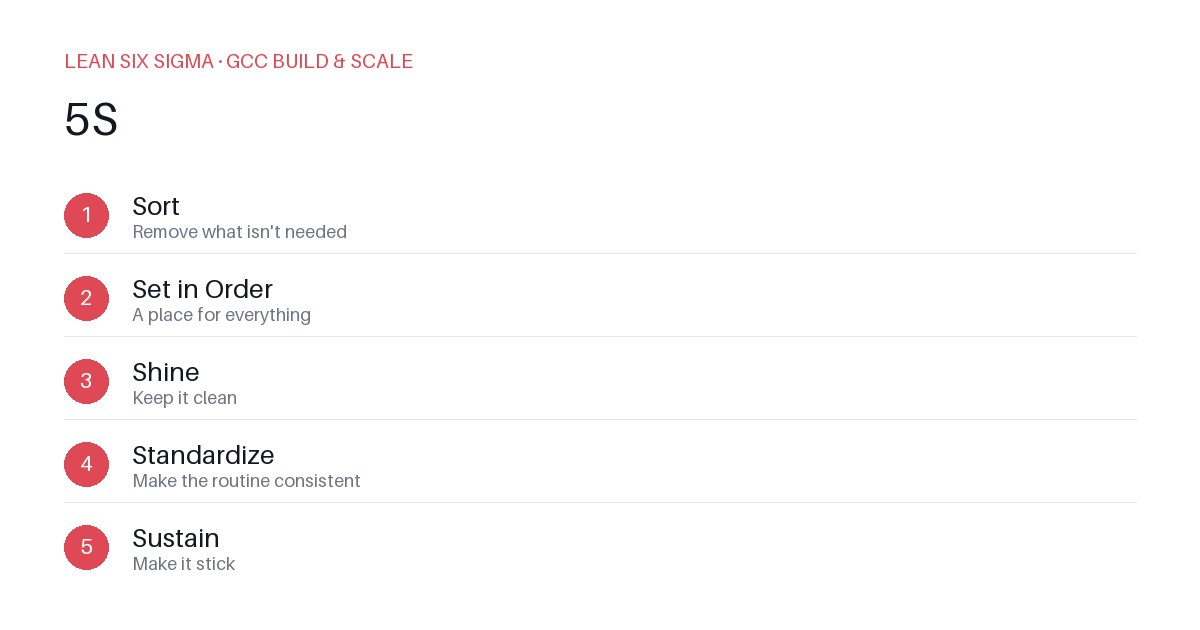
Downloadable templates
Apply 5S principles to physical and digital GCC workspaces to reduce waste, improve focus, and accelerate project delivery.
Global Capability Centers (GCCs) thrive on clarity and efficiency. When your team’s workspace—physical or digital—clutters with outdated files, redundant tools, or unclear processes, productivity drops. 5S, a lean methodology rooted in Japanese manufacturing, offers a practical framework to organize and sustain order. Here’s how to apply 5S to both physical and digital GCC environments.
Sort: Eliminate the Unnecessary
Start by asking: Does this item serve a current business need?
- Physical: Remove broken chairs, expired training manuals, or unused hardware from shared spaces.
- Digital: Archive old project folders, delete duplicate templates, and unsubscribe from inactive Slack channels. Use naming conventions like
YYYY-MM-DD_ProjectName_Versionto prevent duplication.
Real scenario: A GCC in India reduced file search time by 40% after deleting 30% of outdated Confluence pages.
Set in Order: Design for Ease of Use
Organize so every tool has a logical, visible home.
- Physical: Label storage bins, assign dedicated workstations for active projects, and create a “drop zone” for incoming documents.
- Digital: Standardize folder structures across all teams. Use a single source of truth for KPIs (e.g., Power BI dashboard) instead of scattered Excel files.
Pro tip: Implement a “place” for every tool. If it doesn’t have a designated spot, it becomes clutter.
Shine: Maintain Visibility and Readiness
Cleanliness enables focus. A cluttered desk or dashboard distracts from critical work.
- Physical: Wipe down shared monitors, clear cables, and ensure lighting is adequate.
- Digital: Clean up dashboards by removing low-impact metrics. Use conditional formatting to highlight exceptions, not raw data.
Action: Schedule weekly 15-minute “digital spring cleaning” sessions to purge temporary files and update shared drives.
Standardize: Create Consistent Rules
Uniformity reduces cognitive load and prevents drift.
- Physical: Enforce rules like “one chair per desk” or “whiteboards reset daily.” Use visual management—color-coded labels or floor tape—to guide behavior.
- Digital: Mandate standardized templates for SOPs, project charters, and status reports. Use automation tools to enforce naming conventions in file systems.
Example: A GCC in Brazil cut onboarding time by 25% after standardizing tool access protocols and document templates.
Sustain: Build Habits, Not One-Off Fixes
5S fails without accountability. Embed maintenance into daily routines.
- Physical: Assign “5S champions” per team to conduct monthly audits. Use before/after photos to track progress.
- Digital: Automate cleanup tasks (e.g., auto-archive files older than 12 months). Include digital hygiene in performance reviews.
Key metric: Track “time spent searching for information” quarterly. A downward trend signals 5S success.
Bottom line: 5S isn’t about perfection—it’s about reducing friction. Apply it incrementally, measure impact, and let your GCC’s environment support, not hinder, its mission.
Comments
Be the first to comment on this post.
Sign in to leave a comment.