Using DMAIC to Fix GCC Onboarding Delays
August 21, 2026
Like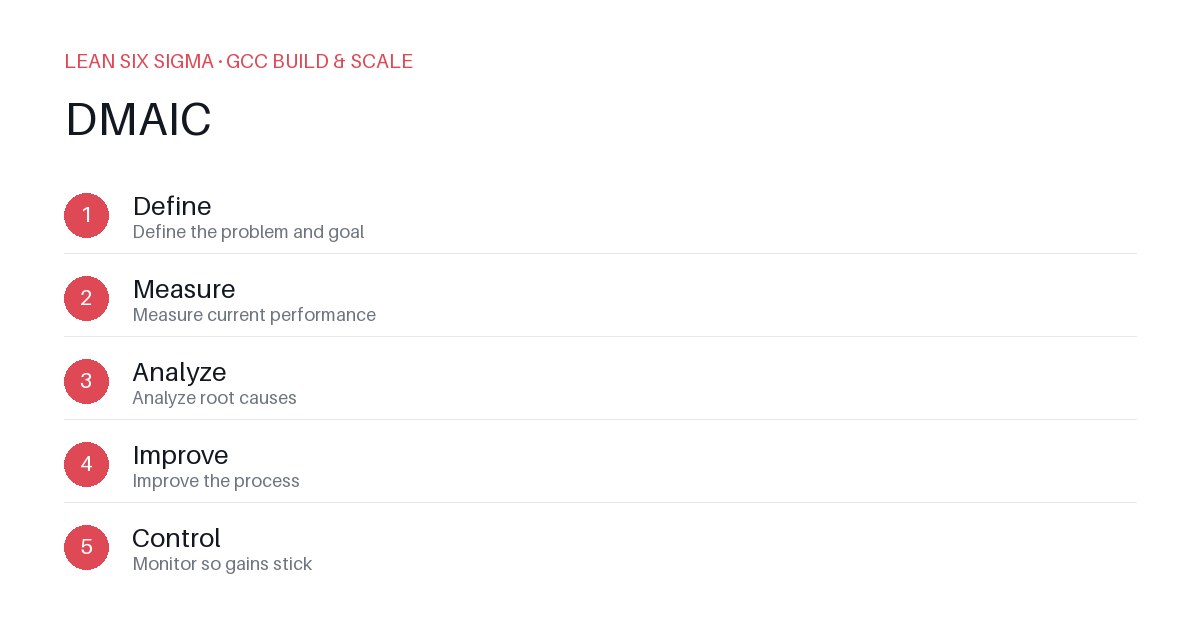
Downloadable templates
Cut onboarding time by 40% using DMAIC phases with real steps to streamline global capability center ramp-up.
Define the Problem
Onboarding delays in Global Capability Centers (GCCs) often stem from unclear handoffs, duplicated training, and lack of standardization. Start by mapping the current process end-to-end. Identify where new hires stall: is it IT setup, compliance training, or mentor pairing? Use a value stream map to visualize wait times and bottlenecks. Track metrics like time-to-productivity and onboarding completion rate. For example, if 60% of new engineers wait three days for access, that’s your first target.
Measure the Baseline
Collect data before making changes. How long does onboarding take from day one to first task completion? Survey new hires and managers to pinpoint pain points. Use tools like time tracking logs and feedback forms. If your GCC averages 14 days to full productivity, that’s your baseline. Compare against industry benchmarks or past GCC launches. Quantify the cost of delays—lost output, delayed projects, higher attrition risk. This data drives prioritization in the next phase.
Analyze Root Causes
Dig into why delays happen. Common causes include: fragmented training materials, manual IT provisioning, no clear role expectations, or inconsistent mentor availability. Use the 5 Whys technique on each bottleneck. For instance, if access provisioning takes three days, ask why: Is IT understaffed? Are approvals required? Are credentials hardcoded? Map causes to process steps. Group issues into themes like communication, tooling, or policy. This reveals which fixes will have the biggest impact.
Improve the Process
Design targeted solutions. Standardize onboarding checklists with clear owners and deadlines. Automate IT access via role-based templates. Pair new hires with trained mentors using a structured 30-60-90 day plan. Replace scattered training videos with a centralized, searchable knowledge base. Pilot changes in one GCC team before rolling out globally. Use lean methods like kaizen events to refine steps. Track leading indicators—access completion time, training quiz scores, mentor check-in frequency—to validate improvements.
Control and Scale
Institutionalize the new process. Update SOPs and train managers on the revised workflow. Set dashboards for real-time monitoring of onboarding metrics. Conduct monthly reviews to catch drift. Celebrate wins to reinforce adoption. As the GCC scales, apply the same DMAIC cycle to other bottlenecks—hiring, project handoffs, or performance reviews. Continuous improvement isn’t a one-time fix; it’s a rhythm that keeps your GCC agile and efficient.
Comments
Be the first to comment on this post.
Sign in to leave a comment.